

According to a study published online in the journal Gut, a species of gut bacteria called Roseburia inulinivorans is associated with greater muscle strength in humans and improved muscle performance in mice. The results suggest that R. inulinivorans can alter metabolic activity in muscle and increase the proportion of fast-twitch (Type II) fibers, which are important for short, intense exercises such as sprinting and weightlifting. Researchers from the Netherlands and Spain believe that the bacterium could potentially be developed into a nutraceutical probiotic used to combat age-related muscle loss.
Gut Microbiome and Muscle Strength
The loss of muscle mass and strength can significantly contribute to frailty, declining mobility and physical function, as well as poorer health. These issues become particularly significant with advancing age and in people with chronic diseases. Gut bacteria have already been linked to numerous aspects of health, including metabolic, neurodegenerative, and cardiovascular diseases. Furthermore, a growing body of evidence points to a possible role of the gut microbiome in regulating muscle mass and function.
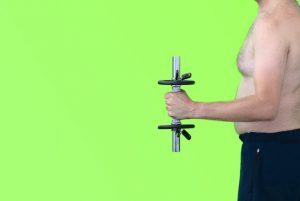
The researchers therefore sought to determine whether certain types of gut microbes are associated with muscle strength and, if so, to investigate how these bacteria might influence muscle tissue. They analyzed stool samples from 90 healthy young adults (ages 18–25) and 33 older adults (age 65+) to identify the bacteria living in their guts. Physical fitness was measured using handgrip strength, performance on the leg press and bench press, and VO₂ max (maximum oxygen uptake during exercise), a measure of cardiorespiratory fitness.
One Group of Bacteria Stood Out in Particular
Of all the bacteria detected in the stool samples, Roseburia was the only group (genus) that showed a positive association with both muscle mass and muscle strength. However, not all individual Roseburia species exhibited the same associations. R. faecis and R. intestinalis were not significantly associated with handgrip strength or VO₂max in either age group.
Among the older participants, those with detectable concentrations of R. inulinivorans had 29% greater handgrip strength than those in whom the bacterium could not be detected. This difference occurred without a corresponding increase in maximum oxygen uptake, suggesting better fitness. Among younger adults, higher concentrations of R. inulinivorans were associated with both greater handgrip strength and higher VO₂max. A higher relative abundance of both R. inulinivorans and R. intestinalis was also associated with better performance on the leg press and bench press. In contrast, the concentrations of R. faecis and R. hominis were not associated with the measured muscle strength values. According to the researchers, this suggests that different Roseburia species may influence different components of muscle performance.
Roseburia Concentrations Decrease With Age
Roseburia bacteria were generally more common among younger participants. In this group, the proportion of R. faecis ranged from 0% to 3.3%, that of R. intestinalis from 0% to 5.5%, and that of R. inulinivorans from 0% to 6.6%. Among older adults, the values were lower. The proportion of R. faecis ranged from 0% to 2.2%, that of R. intestinalis from 0% to 0.7%, and that of R. inulinivorans from 0% to 1.3%.

To investigate whether Roseburia might directly influence muscle strength—rather than merely being associated with it—the researchers conducted an experiment with 32 mice. Prior to the experiment, the mice were given a cocktail of antibiotics for two weeks to decimate their gut microbiome. They were then administered Roseburia species once a week for eight weeks. The animals were randomly divided into four groups. Three groups received different Roseburia strains, while the fourth group received no Roseburia and served as the control group.
Increased Muscle Strength in Mice
None of the Roseburia species increased the mice’s running time to exhaustion. The situation was different with regard to muscle strength. Compared to the control animals, mice that received R. inulinivorans showed an increase in forelimb grip strength of about 30%, which the researchers used as a measure of muscle function. The improvement was observed after 4, 6, and 8 weeks of treatment. Mice treated with R. inulinivorans also developed larger muscle fibers and exhibited a significantly higher proportion of type II fibers (“fast twitch”) in the soleus muscle of the calf than the other groups. However, this difference was not significant when the R. inulinivorans mice were specifically compared to those treated with R. intestinalis. A closer look at muscle fiber size revealed a relatively uniform distribution among the control mice. In contrast, animals treated with R. inulinivorans had a higher proportion of larger fibers than mice administered other Roseburia species or no Roseburia at all.
The physical changes in the muscles were accompanied by changes in proteins and enzymes involved in the metabolic processes that generate energy for muscle activity. Particularly notable were changes in metabolic pathways related, among other things, to purine metabolism and the pentose phosphate pathway. These metabolic pathways play an important role in energy supply and in protecting cells from oxidative stress. The results suggest that R. inulinivorans may not only influence muscle structure but also potentially alter the way muscle cells supply and utilize energy.
The researchers also found evidence that amino acids might be involved in this process. Following treatment with R. inulinivorans, levels of certain amino acids changed in both the gut contents and the blood of the mice. At the same time, changes were observed in metabolic pathways within the muscle tissue. This could indicate that the gut bacterium influences the availability of certain metabolic products, which subsequently reach the muscles via the bloodstream. However, it is not yet clear which specific substances or signaling pathways are responsible for the observed increase in muscle strength.
The changes in the muscle fibers could also explain why the treated mice became stronger but did not show increased endurance during running. Type I fibers are primarily suited for prolonged exertion, while Type II fibers contract faster and with greater force and play an important role in short, intense movements. The higher proportion of type II fibers may therefore have contributed to the increased grip strength. At the same time, the researchers found that the mice treated with R. inulinivorans had a higher proportion of particularly large muscle fibers. Larger muscle fibers can generally generate more force, so this finding is also consistent with the observed improvement in grip strength.
However, the difference in the proportion of Type II fibers was not clear-cut in all comparisons. In particular, in the direct comparison between mice treated with R. inulinivorans and those treated with R. intestinalis, the difference was not statistically significant. The results should therefore not be interpreted to mean that R. inulinivorans is the only Roseburia species proven to alter muscle fiber composition.
The Gut-Muscle Axis
It is also noteworthy that the mice did not have to undergo any specific form of strength training to demonstrate the observed increase in grip strength. The experiment was primarily designed to determine whether R. inulinivorans itself could have an effect on the muscles. However, the finding by no means implies that a gut bacterium could replace exercise or strength training. Rather, it provides further evidence that the link between the gut microbiome and muscle strength could be based, at least in part, on direct biological changes within the muscle.
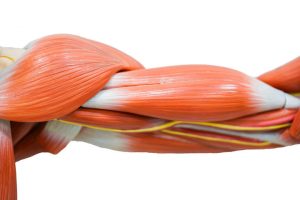
It is particularly interesting that not all Roseburia species studied produced the same effect. The most significant improvement in grip strength was observed in the animals that received R. inulinivorans. Other Roseburia species did not lead to a comparable increase. This suggests that certain characteristics of individual bacterial species may be decisive, rather than simply their membership in the Roseburia genus.
Overall, this paints a possible picture of the so-called gut-muscle axis: R. inulinivorans could influence certain metabolic processes in the gut, thereby altering the metabolic products available in the blood. These, in turn, could send signals to the muscles and influence energy balance, muscle fiber size, or their composition there. The increased grip strength in the mice could thus be the result of several interconnected changes. However, further studies are needed to determine whether the same mechanism occurs in humans.
Important Questions Remain Unanswered
The researchers point out that the study has several limitations. In the mouse experiment, none of the human Roseburia species permanently colonized the animals’ intestines. Furthermore, the researchers did not directly examine certain signaling pathways associated with inflammation or neuromuscular signaling—both of which could have contributed to the observed effects. Long-term studies will also be necessary to determine whether changing concentrations of R. inulinivorans actually cause changes in muscle function or whether the abundance of the bacterium changes as a result of differences in muscle function.
Despite these uncertainties, the researchers conclude: “Overall, our results provide strong evidence for a gut-muscle axis in which R. inulinivorans positively influences muscle metabolism and muscle strength.” They conclude: “We also observed that the relative abundance of R. inulinivorans is lower in older adults than in young adults. Its abundance appears to decline with age—a phase in which the prevalence of sarcopenia (muscle wasting) increases—suggesting a potential role for R. inulinivorans as a probiotic candidate for maintaining muscle strength.”