
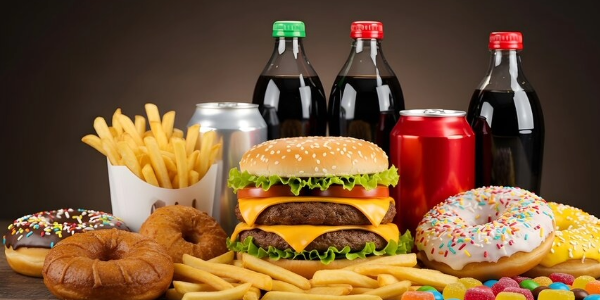
Ultra-processed foods (UPFs) are heavily modified industrial products that contain added fats, sugars, starch, salts, and chemical additives such as emulsifiers. Common examples include soft drinks, packaged snacks, and processed meats. During production, many natural nutrients are removed, making the foods very different from their original form. These products often contain ingredients that the human body has not encountered in the past. Today, ultra-processed foods make up nearly 60% of the average adult diet in the United States and about 70% of children’s diets.
Previous research has shown that people who consume large amounts of these highly processed foods are more likely to develop metabolic syndrome. This condition includes overweight and obesity, high blood pressure, abnormal cholesterol levels, and insulin resistance. High consumption of UPFs has also been linked to elevated levels of high-sensitivity C-reactive protein, an inflammatory marker that is considered a strong predictor of future cardiovascular disease (CVD), which primarily includes heart attacks and strokes. However, to date, there is little data directly examining whether higher intake of ultra-processed foods is associated with an increased risk of cardiovascular disease.
Why the Link to Heart Disease is Important Now

As consumption of highly processed foods continues to rise and cardiovascular disease remains one of the leading causes of death in the United States and worldwide, understanding the link between the two is becoming increasingly important. Cardiovascular disease affects the heart and blood vessels. The most common types include high blood pressure, coronary heart disease, heart attack, and stroke. However, many processes begin gradually. Atherosclerosis (hardening of the arteries) develops over years through deposits in the artery walls, often promoted by high blood lipid levels, high blood pressure, diabetes, smoking, lack of exercise, and poor diet. With age, blood vessels lose elasticity, inflammatory processes increase, and metabolic changes become more likely. This is why the risk of cardiovascular disease increases significantly from middle age onwards. At the same time, many risk factors are already established at a young age. A permanently high-processed diet, lack of exercise, and obesity in adolescence or young adulthood can trigger early vascular changes. These often go unnoticed for a long time, but increase the risk of disease later in life.
Researchers at Florida Atlantic University’s Charles E. Schmidt College of Medicine investigated this possible link using data from the US National Health and Nutrition Examination Survey (NHANES). Their results, published in the American Journal of Medicine, suggest that high consumption of ultra-processed foods can have serious cardiovascular consequences.
“The results of our study, based on a large, nationally representative sample of 4,787 adults in the US, show that individuals with the highest consumption of UPFs have a statistically significant and clinically relevant 47% higher risk of cardiovascular disease,” said Dr. Charles H. Hennekens, FACPM, FACC, lead author, First Sir Richard Doll Professor of Medicine and Preventive Medicine, and Senior Academic Advisor at FAU Schmidt College of Medicine. “These findings have important implications for future research, as well as clinical care and public policy.”
A 47% Higher Risk of Cardiovascular Disease
The research team analyzed NHANES data from 4,787 adults aged 18 years and older collected between 2021 and 2023. All participants kept detailed food diaries for at least one day and reported whether they had ever had a heart attack or stroke. Participants documented everything they ate over two days so that researchers could calculate what percentage of each person’s total calories came from ultra-processed foods. Using a validated and widely used food classification system, individuals were then divided into four groups based on their UPF intake, from lowest to highest.
Cardiovascular disease was defined in the study as a history of self-reported heart attacks or strokes. The researchers adjusted their analysis to account for factors such as age, gender, race and ethnicity, smoking status, and income. The average age of participants was 55, and 55.9% were women. After these adjustments, individuals in the group with the highest consumption of ultra-processed foods had a statistically significant and clinically relevant 47% higher risk of cardiovascular disease compared to those in the group with the lowest consumption.
Parallels to Tobacco and Challenges for Public Health
The researchers note that growing awareness of the health risks associated with this type of food could follow a similar pattern to that seen with tobacco in the last century. Just as it took decades for the dangers of smoking to be widely recognized, it may also take some time to reduce dependence on ultra-processed foods. This is partly due to the influence of large multinational companies that dominate the food market. In addition, many people have limited access to healthier foods, underscoring the need for more comprehensive public health solutions.
“Combating UPFs is not just about individual choices—it’s about creating an environment where the healthy option is the easy option,” Hennekens said. “Clinical guidelines and public health education are necessary to make nutritious foods accessible and affordable for all.”
Link to Colorectal Cancer and Other Diseases
The researchers also point to rising rates of colorectal cancer in the United States, particularly among younger adults. Many of the risk factors for colorectal cancer overlap with those for cardiovascular disease, including dietary habits. “Increased consumption of UPFs may be a contributing factor, along with other dietary and lifestyle factors that influence a range of common and serious gastrointestinal diseases,” said Dr. Allison H. Ferris, FACP, co-author and professor and chair of the Department of Medicine at FAU Schmidt College of Medicine. “Awareness is the first step toward prevention.”
Although large-scale randomized trials are still needed to confirm these findings, the researchers emphasize that healthcare providers can take action now. They recommend advising patients to reduce their consumption of highly processed foods and to adopt other proven lifestyle changes and appropriate medical therapies.
Why Could Processed Foods be a Risk Factor?
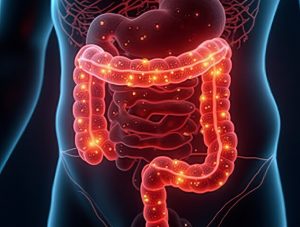
These types of foods often contain high amounts of sugar, saturated fats, salt, and additives, but little fiber. However, fiber is important for healthy gut flora and normal bowel movements. Without it, the gut microbiome—the totality of gut bacteria—changes. A disturbed microbiome can promote chronic inflammation, and chronic inflammation is considered a central mechanism in the development of colon cancer.
In addition, highly processed foods often promote obesity. Obesity is a risk factor for both colon cancer and cardiovascular disease. Adipose tissue is hormonally active and can release pro-inflammatory messenger substances that influence cell growth and possibly promote cancer processes. In addition, some UPFs contain emulsifiers, preservatives, or other additives that are suspected of altering the intestinal barrier or promoting inflammatory processes. Furthermore, highly processed meat products (e.g., cured meat) produce potentially carcinogenic substances such as nitrosamines.
Another factor is the glycemic effect of many UPFs: highly fluctuating blood sugar and insulin levels can promote metabolic disorders in the long term. Such metabolic changes are also associated with cancer and cardiovascular risks. It is important to note that UPFs are probably not the sole cause. Lack of exercise, alcohol, smoking, lack of sleep, and genetic factors also play a role. The key point made by the researchers is the overlap in risk profiles: a diet that is harmful to the heart and blood vessels can often also increase the risk of colon and other gastrointestinal diseases.