
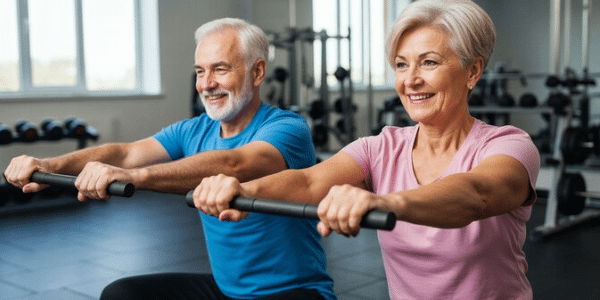
A recent study led by researchers at the University of the Sunshine Coast (UniSC) suggests that high-intensity interval training (HIIT) may be one of the most effective methods for older adults to lose body fat while maintaining muscle mass. The study compared different training intensities among healthy older adults and found that all training levels led to some degree of fat loss. However, only HIIT helped participants maintain their muscle mass.
Training Intensity and Body Composition
More than 120 healthy older adults from the greater Brisbane area participated in the study. Over a six-month period, the participants completed three training sessions per week at a gym. On average, they were 72 years old and had a body mass index (BMI) of 26 kg/m², which is still considered normal for adults over 65. The results were published in the journal Maturitas. Researchers from the “Healthy Ageing Research Cluster” at the University of the Sunshine Coast (UniSC) and the University of Queensland were involved in the project. The scientists were interested not only in body weight but, above all, in body composition—that is, the ratio of fat mass to fat-free mass, which primarily consists of muscle. Especially in older age, body composition provides significantly more information about health status than weight alone. Two people can have the same BMI but differ considerably in terms of muscle and fat percentage. That is why body composition is now considered an important indicator of healthy aging.
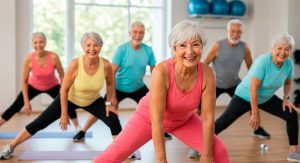
“We found that high-, moderate-, and low-intensity exercises all led to moderate fat loss, but only HIIT preserved lean muscle mass,” said lead author and exercise physiologist Dr. Grace Rose of the University of the Sunshine Coast. The study thus examined a crucial aspect of the aging process. As we age, muscle mass naturally decreases, while body fat percentage often increases. This process begins as early as the fourth or fifth decade of life and accelerates with advancing age. The consequences can include loss of strength, limited mobility, and an increased risk of falls, frailty, and metabolic and cardiovascular diseases. HIIT, short for High-Intensity Interval Training, combines short, very strenuous exercise phases with recovery intervals. A typical workout consists of several repetitions in which the intensity is high enough for a few seconds to several minutes to leave you significantly out of breath. This is followed by a low-intensity phase before the next interval begins. While this makes the workout challenging, the recovery breaks also make it suitable for many older adults, provided it is tailored to their individual fitness levels and supervised by a qualified professional.
According to Dr. Rose, moderate-intensity exercise also contributed to reducing body fat, but it had a drawback. “While moderate exercise reduced fat mass, it also led to a slight decrease in muscle mass,” she explained. Maintaining muscle mass plays a central role, especially as we age. Muscles not only enable movement but also stabilize the joints, protect the bones, support metabolism, and help regulate blood sugar levels. If muscle mass is lost, everyday tasks such as climbing stairs, shopping, or getting up from a chair can become increasingly difficult. “Both high and moderate exercise intensities improved weight distribution in the abdominal area,” added Dr. Rose. So-called visceral abdominal fat, in particular, is considered a health concern. Unlike subcutaneous fat, it surrounds the internal organs and releases signaling molecules that can promote chronic inflammatory processes. This increases the risk of type 2 diabetes, cardiovascular disease, and other age-related metabolic disorders, among other things. The results from the low-intensity exercise group are currently undergoing further analysis.
Dr. Rose said that the study results are particularly relevant because changes in body composition are closely linked to the onset and progression of many chronic diseases in older age. Today, one of the most important goals of healthy aging is not just body weight but, above all, maintaining muscle mass while simultaneously reducing excess body fat.
Why HIIT Might Protect Muscles
Mia Schaumberg, associate professor of physiology at the University of the Sunshine Coast and co-author of the study, emphasized that the results suggest that not only regular exercise but, above all, the training intensity plays a decisive role in maintaining physical performance in old age. In the study, high-intensity interval training (HIIT) consisted of repeated short bursts of very high-intensity exercise followed by active recovery periods. During the intense intervals, participants exercised at their individual thresholds—they were breathing heavily and could barely carry on a conversation. It is precisely this alternation between intense effort and recovery that makes it possible to repeatedly challenge the body without permanently overloading it.
“HIIT is likely more effective because it places greater stress on the muscles, thereby sending a stronger signal to the body to preserve muscle tissue rather than break it down,” explained Schaumberg. During intense exercise, significantly more muscle fibers are activated than during steady-state training at low or moderate intensity. In particular, the fast-twitch muscle fibers—which are especially important for strength, speed, and cushioning falls—are specifically targeted. These are often the first muscle fibers to deteriorate as we age. Regular exercise can help maintain their function for longer and counteract age-related muscle loss. At the same time, intense physical activity triggers a series of adaptive processes in muscle tissue. Among other things, it promotes muscle protein synthesis—that is, the building and repair of muscle proteins—and improves the muscles’ ability to absorb nutrients such as glucose. This allows the body to better preserve existing muscle mass, even while simultaneously using fat reserves for energy.
The metabolism also benefits from high-intensity training. During exercise, energy expenditure increases sharply, but the body continues to burn more energy for hours after the workout than it does at rest. This so-called afterburn effect (Excess Post-exercise Oxygen Consumption, EPOC) is generally more pronounced during high-intensity exercise than after moderate endurance training. This could explain why HIIT often achieves similarly good or even better results in fat loss despite comparatively short training sessions. Furthermore, numerous previous studies have shown that high-intensity interval training can have positive effects far beyond changes in body composition. It often improves maximum oxygen uptake (VO₂max), one of the most important markers of cardiovascular fitness and overall life expectancy. At the same time, insulin sensitivity increases, allowing the body to regulate blood sugar more efficiently. In addition, intense exercise stimulates the formation of new mitochondria—the “powerhouses” of cells. This provides the muscles with more energy, which improves endurance and resilience.
These effects could be particularly valuable for older adults. Good muscle strength, sufficient endurance, and a healthy cardiovascular system are crucial for performing daily activities independently and reducing the risk of falls, the need for long-term care, and chronic diseases. That is why HIIT is increasingly attracting interest in geriatric and sports medicine. However, the researchers point out that high-intensity interval training should always be tailored to the individual. The study participants completed their training over a six-month period under professional supervision. For older adults with cardiovascular diseases, joint problems, or other pre-existing conditions, a medical examination and a gradual introduction to higher levels of exertion are therefore recommended before starting a HIIT program.