
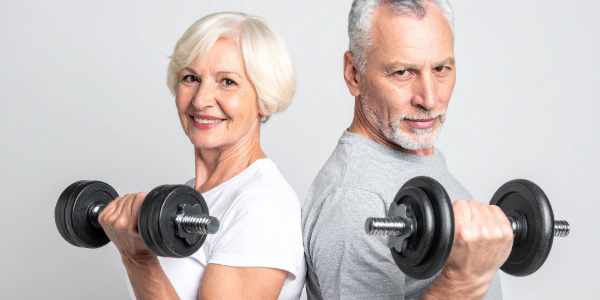
Healthy aging isn’t just about living as long as possible. What also matters is how independently we can live during those years. Can you get up from a chair without help? Can you still manage the stairs on your own? Can you carry a shopping bag or stand steadily on your feet again after an illness? These everyday abilities depend largely on our muscle strength.
As we age, muscle mass decreases in many people. Even more important, however, is the loss of muscle strength and physical performance. This process can contribute to sarcopenia—an age-related loss of muscle mass, muscle strength, and physical function. The good news: Muscle strength isn’t simply an inevitable consequence of aging. It can be trained even in later life.
When Muscles Weaken, it’s About More than Just Strength
Muscles aren’t just responsible for moving our arms and legs. They help stabilize our joints, support our balance, and enable movements we’re barely aware of in our daily lives. At the same time, well-maintained muscles can help us better cope with physical challenges such as illness, prolonged inactivity, or a period of recovery.
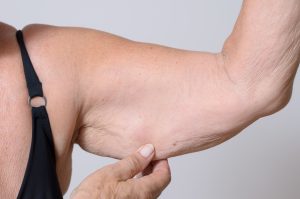
When muscle strength is lost, seemingly minor limitations may initially arise: standing up from a low chair becomes more difficult, climbing stairs becomes more strenuous, or walking on uneven surfaces becomes less steady.
As the condition progresses, this can lead to a loss of independence. The risk of falls is also linked to sarcopenia. A systematic review and meta-analysis from 2019 evaluated 33 studies involving a total of approximately 45,900 older adults. The study found that people with sarcopenia had a higher risk of falls and bone fractures than those without sarcopenia.
Particularly at Risk: People With Multiple Conditions
The loss of muscle strength does not affect everyone equally. Special attention should be given to older adults who are living with multiple chronic conditions at the same time. This so-called multimorbidity can be associated with an increased risk of sarcopenia and physical frailty.
Research in the field of geriatric medicine is therefore increasingly shifting its focus from individual conditions to the interplay between various chronic health problems and muscle health and physical performance. The Newcastle Biomedical Research Centre has dedicated a separate research program to this connection, focusing on aging, sarcopenia, and multimorbidity. This is also relevant because older adults with multiple conditions are often precisely the group that initially feels particularly insecure about exercising.
Why Walking Alone is Not the Same as Strength Training
Exercise is fundamentally valuable. However, different forms of physical activity provide different stimuli. Walking, cycling, or other endurance activities can primarily improve cardiorespiratory fitness. Strength training, on the other hand, pursues a different goal: the muscles are specifically challenged against resistance.
This can be done with dumbbells or weight machines, but also with resistance bands or one’s own body weight. Squats, standing up from a chair, step-ups, or push-ups are therefore—depending on the technique and fitness level—also forms of strength training.
A review article by Hurst and Sayer concludes that different forms of exercise do not have the same effects on muscle strength and physical function in older adults with sarcopenia and physical frailty.
Strength Training Develops Skills We Need in Everyday Life
The value of strength training, therefore, isn’t necessarily reflected in how much weight someone can lift at the gym. Far more interesting are the movements of daily life. The leg muscles, for example, help us stand up from a chair or walk up stairs. Back, shoulder, and arm muscles are needed to lift objects, carry groceries, or maintain good posture.
Strength training can thus serve as a form of training for independence. A scientific study on the treatment of sarcopenia describes resistance training as a central or first-line intervention, even though the optimal dosage and practical implementation must be tailored to the individual.
It Doesn’t Have to be the Heaviest Weight
Strength training is often associated with heavy dumbbells and gyms. That isn’t necessary. What matters most is that the muscles receive a sufficiently strong training stimulus. Depending on one’s starting level, this can be achieved with relatively light weights, resistance bands, or bodyweight exercises.
Studies on so-called “minimal-dose resistance training” also examine how little strength training might be necessary to improve or maintain muscle mass, strength, and function. Research shows that even relatively small amounts of training can be effective, especially for people who have not been very active up to this point.
This is an important message for people who believe they don’t have time for strength training. A little is not the same as nothing. A short workout can be a meaningful start. As strength increases, the training stimulus can then be gradually increased.
Why Regular Training is More Important Than a Perfect Workout Plan
To build and maintain muscle, training doesn’t have to be complicated. What matters far more is that it happens regularly. For example, training the major muscle groups twice a week can help build a solid foundation. For people who have done very little strength training so far, starting with a lower volume may also be a good approach.
Research on minimal-dose training shows that even small amounts of exercise can be effective. However, this should not lead to the general recommendation that a single workout per week is optimal for everyone. Rather, such a low dose can be a realistic starting point, especially for beginners.
The goal should be to find a routine that can be integrated into daily life over the long term.
The Legs Deserve Special Attention
When it comes to maintaining independence in old age, the muscles of the lower body are particularly important. Strong legs enable:
- Standing up from a chair
- Climbing stairs
- Walking safely
- Standing up from the floor
- Stability when changing direction
- Better coping with everyday physical demands
That’s why exercises for the legs and hips belong in virtually every strength training program for healthy aging. At the same time, the upper body should not be neglected. The back, chest, shoulders, and arms, for example, play an important role in carrying, lifting, and maintaining stable posture.
Nutrition also Plays a Role
Exercise alone is not the only factor that determines how well muscles are maintained. Nutrition is also relevant—especially an adequate intake of protein.

Proteins provide amino acids that the body needs to build and repair muscle tissue. In older adults, several factors can contribute to this: reduced appetite, illness, weight loss, or an overall lower food intake. Strength training and an adequate protein intake are therefore two factors that should be considered together when it comes to muscle maintenance.
However, “more protein” does not automatically mean “the more, the better.” Individual needs depend, among other things, on age, health status, height, activity level, and diet.
Sometimes the Biggest Hurdle isn’t the Body, But Fear
Although the benefits of strength training are well-documented, many older adults do not exercise their muscles regularly. There are various reasons for this. Some simply don’t know how to get started. Others are afraid of getting injured. Still others believe that strength training is only for young people or for people at the gym.
A qualitative study involving older adults living with multiple chronic conditions, frailty, or a decline in their health highlighted precisely these uncertainties. Among the concerns mentioned were pain, limited mobility, fear of injury, fear of falling, and a lack of knowledge about resistance training. At the same time, many participants were generally willing to try strength training if it was individually tailored and supervised by qualified professionals. This is an important point: uncertainty does not automatically mean rejection. Often, all that’s missing is a safe and understandable introduction.
Strength Training is Still Possible Even at 80 or 90
One of the most impressive findings from the research is that even very old people can still respond to strength training. A widely cited JAMA study, for example, examined ten frail nursing home residents aged around 90. After eight weeks of intensive strength training, significant improvements in muscle strength and physical function were observed. Although the study is somewhat older and small in scale, it is nonetheless historically significant: it impressively demonstrated that advanced age alone does not mean that muscles can no longer be trained. This principle still holds true today. It is not automatically too late to start strength training.
For many people, the first step doesn’t have to take place at the gym. A simple home workout can, for example, include exercises that target the major muscle groups:
- Standing up and sitting down from a sturdy chair
- Squats in a variation suited to the individual
- Step-ups onto a stable step
- Exercises with a resistance band
- Wall push-ups
- Exercises for the back, shoulders, and arms
It is crucial to adjust the intensity to your own fitness level and to increase it gradually over time. If you have existing medical conditions, severe joint pain, significant frailty, or uncertainty about your physical capacity, professional guidance may be advisable.
Healthy Aging Requires More than Just Endurance
For a long time, physical activity was primarily associated with endurance: walking, jogging, cycling, or swimming. These activities remain important. However, healthy aging requires more than just good endurance. Anyone who wants to remain independent also needs sufficient strength, balance, flexibility, and coordination. Strength training should therefore not be seen as competing with endurance training.

It complements it. A walk does not provide the same workout as a squat. A bike ride does not automatically replace targeted muscle training. And conversely, strength training does not replace the health benefits of regular endurance exercise. The crucial question is therefore not, “Strength training or endurance training?” but rather, “How can I effectively combine the two?”
Health Policy is Also Recognizing the Importance of Muscle Strength
The fact that strength training is now taking center stage is evident not only in research. The importance of physical activity in older age is also increasingly being discussed in health policy circles. In the United Kingdom, the Health and Social Care Select Committee launched a 2025 study on how physical activity can support healthy aging and delay frailty as well as several chronic diseases.
At the same time, the Chartered Society of Physiotherapy is working through its “Stronger My Way” campaign to make strength training more accessible to people with long-term conditions and to help overcome their reservations. Healthy aging cannot be measured solely by blood test results or life expectancy. It also becomes evident in everyday situations. Can I get up from a chair on my own? Can I carry my shopping bag? Can I manage a flight of stairs? Can I get back on my feet after an illness? Such abilities seem like a given—until they suddenly aren’t. That’s exactly why maintaining muscle mass is such an important part of healthy aging.
Conclusion: Strength Training isn’t a Fitness Project – it’s a Piece of Independence
Strength training in old age doesn’t have to be extreme or complicated. It’s not about lifting the heaviest possible weights or achieving a certain physique. It’s about something much more fundamental: the ability to manage your own daily life independently for as long as possible.
Research shows that muscle strength can be built even in older age and that resistance training plays a central role in the prevention and treatment of muscle loss and physical frailty.
Even a modest start can be beneficial. The key is to simply get started, adapt the workout to your own situation, and gradually increase the intensity over the long term. After all, strength training isn’t just about building muscles. It’s about maintaining independence, mobility, and quality of life.
Related Posts
-

After hitting 40 years, workouts don’t get any easier. This article sheds light on how…
-
Neurodegeneration represents degenerative diseases of nerves that include Alzheimer's, Parkinson's and spinal muscular atrophy. Forms…
-
A healthy diet high in plant-based foods, with a low-to-moderate intake of healthy animal-based foods…