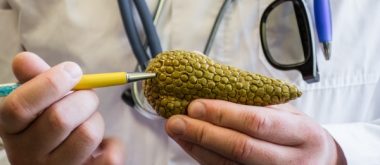
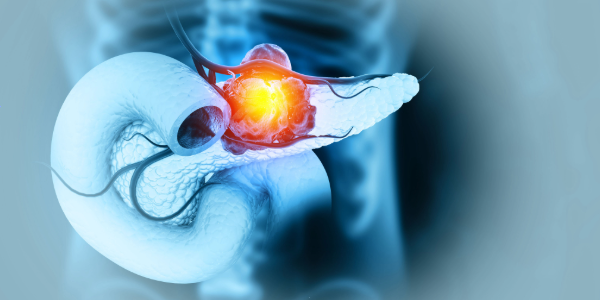
As people age, the risk of developing numerous types of cancer increases. Pancreatic cancer, too, occurs predominantly in older people and is among the most difficult cancers to treat. One reason for this lies not only in the characteristics of the tumor cells themselves. The environment in which the tumor develops can also play a decisive role in enabling cancer cells to grow, adapt, and resist treatment. Researchers at the Sylvester Comprehensive Cancer Center at the University of Miami’s Miller School of Medicine have now investigated a potential approach that could specifically alter this protective environment. The focus is on a molecule called IL1RAP, a receptor involved in transmitting various inflammatory signals.
The scientists believe that IL1RAP acts as a sort of connection point between different cells in the environment surrounding a pancreatic tumor. If this signaling pathway is blocked, the interaction between cancer cells, immune cells, and connective tissue cells could potentially change. The results of the research were published in JCI Insight. Based on the preclinical findings, a clinical trial is now being prepared in which a treatment targeting IL1RAP will be combined with chemoimmunotherapy.
The Particular Challenge of Pancreatic Cancer
The treatment of pancreatic cancer presents physicians with several major hurdles. The disease is often not detected until it has reached an advanced stage. At the same time, the tumors are surrounded by a complex network of various cells and tissue structures.

This so-called tumor microenvironment is of increasing interest to cancer researchers. It consists, among other things, of immune cells, fibroblasts, and connective tissue. Rather than merely passively surrounding the tumor, these cells can communicate with one another and thereby create conditions under which cancer cells can survive more easily.
A particular problem is that the tumor microenvironment can simultaneously promote inflammatory signals and suppress the activity of the immune system. This creates a situation in which inflammatory processes are present, yet the body’s own defenses are still unable to effectively attack the tumor. Certain medications may also be less effective under such conditions.
IL1RAP as a Potential Target
This is precisely where the new research comes in. IL1RAP is involved in signaling pathways that regulate inflammatory responses within the tissue. The researchers investigated the role this receptor plays in the interaction between different cells in the environment of a pancreatic tumor.
According to the results of the preclinical studies, IL1RAP may help link several pro-inflammatory signals together. This could create a network that supports tumor growth while simultaneously hindering an effective immune response.
Dr. Jashodeep Datta and his team therefore suspect that blocking IL1RAP might not only affect individual cancer cells. Instead, the strategy is intended to alter the conditions under which the tumor grows. This is an important distinction from therapies that target only the cancer cells. Rather, the scientists are attempting to deprive the tumor of part of its protective environment.
Further Research Provides Similar Evidence
The importance of IL1RAP for the tumor microenvironment has also been investigated by other scientists. In a study published in 2024, an independent research team examined the role of IL1RAP in so-called cancer-associated fibroblasts. These connective tissue cells are an important component of the microenvironment surrounding pancreatic tumors and can influence inflammatory processes as well as communication between different cell types.
Among other things, the researchers investigated the IL1RAP-blocking antibody nadunolimab. In their experiments, blocking the signaling pathway caused fibroblasts to release fewer specific pro-inflammatory signaling molecules. As a result, fewer immune cells—which can play a cancer-promoting role in the tumor microenvironment—were attracted to the area.
Preclinical models also provided evidence of an antitumor effect of IL1RAP inhibition. The results thus support the hypothesis that IL1RAP may be relevant not only to individual cancer cells but also to the complex network of tumor cells, connective tissue, and immune cells. The study thus provides an additional scientific perspective on the approach of investigating IL1RAP as a therapeutic target. It does not originate from the same research group as the current study.
Fewer Immunosuppressive Cells, More Active T Cells
In their preclinical experiments, the researchers observed several changes following IL1RAP inhibition. Among other things, the number of certain immunosuppressive cells in the tumor tissue decreased. At the same time, T cells showed increased activity. These immune cells play an important role in recognizing and fighting cancer cells.
The severe scarring and hardening of the tumor tissue, which is common in pancreatic cancer, was also reduced in the studies. Such a fibrotic environment can hinder the access of immune cells and drugs to the tumor. The combination of these various changes could explain why the tumors in the preclinical models responded better to additional treatment. It is important to note, however, that these results come from preclinical research and do not yet prove that the method will work just as well in humans.
A Different Strategy in the Fight Against Cancer
This approach differs from the traditional notion of treating cancer exclusively by killing tumor cells. Cancer cells can adapt to different conditions. If their environment offers them protection, they may be better able to survive treatment under certain circumstances. That is why researchers are increasingly trying to target both the tumor cells and their environment simultaneously.
This approach could be particularly promising for pancreatic cancer. The tumor is strongly connected to its surrounding tissue and is in constant interaction with immune and connective tissue cells. By blocking a central signaling pathway such as IL1RAP, the scientists hope to influence several of these interactions simultaneously.
From Laboratory Research to Patient Treatment
The next steps are now particularly important. The research team is working to translate the findings from laboratory studies into a clinical trial. The plan is to conduct what is known as neoadjuvant treatment, in which patients receive therapy prior to their scheduled surgery. For operable pancreatic cancer, a treatment targeting IL1RAP will be combined with chemoimmunotherapy.
This approach offers researchers a particular advantage: they can examine the tumor tissue before and after treatment. This allows them to determine much more precisely whether and how the therapy alters the tumor microenvironment. For example, the scientists can analyze whether the composition of immune cells changes, whether fibrosis decreases, and whether certain biological signaling pathways are actually attenuated.
The goal is not only to investigate whether the treatment is effective in principle. The researchers also want to better understand why a tumor responds to the therapy or why it may not be successful in certain patients.
Why the Study Is Interesting for Cancer Research
The planned clinical trial could thus establish a link between basic research and modern cancer therapy. Instead of waiting until after surgery to examine what happened based solely on the removed tumor, researchers can specifically observe the biological changes during treatment.

Dr. Peter Hosein, who is also involved in the research, emphasizes the importance of this connection between the laboratory and clinical practice. Every new treatment method could provide additional information about how pancreatic cancer changes in response to therapy.
Such insights are particularly important for such a complex disease. Not every tumor responds to treatment in the same way. Understanding the individual tumor microenvironment could, in the long term, help tailor therapies more precisely to specific patient groups.
The development of this new therapeutic approach is supported, among other things, by a grant from the V Foundation for Cancer Research. The research project was selected as part of a translational research program. Such funding programs are designed to help translate promising findings from the lab into clinical trials more quickly. A total of $800,000 is available for the project over a four-year period. This funding is intended to support the further development of the IL1RAP approach and the transition from preclinical research to early-phase clinical trials.
Not Yet a Proven Therapy—But an Interesting Approach
The current results are promising but must be evaluated with due caution. The studies to date show, above all, that blocking IL1RAP in preclinical models can trigger changes in the tumor microenvironment.
Whether this actually results in a clinically relevant benefit for people with pancreatic cancer must first be determined through the planned studies. Possible side effects, the optimal combination with other therapies, and the question of which patients might benefit the most also remain to be clarified.
Nevertheless, the research highlights an important trend in modern oncology: the fight against cancer is increasingly directed not only at the tumor cells themselves. The biological environment that supports a tumor and can protect it from the immune system or medications is also becoming a potential therapeutic target.
If the IL1RAP approach is validated in clinical trials, it could eventually lead to an additional strategy for treating pancreatic cancer. Until then, however, further research is necessary.
Related Posts
-

Pancreatic cancer is the fourth-leading cause of cancer deaths in the United States and is…
-
Pancreatic cancer is still one of the deadliest forms of cancer. It has a higher…
-
A variety of different types of lung cancer is possible for older men. Understanding why…