

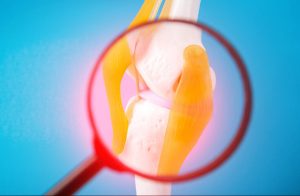
A study conducted by researchers at Stanford Medicine has found that an injection that blocks a protein associated with the aging process can reverse the natural loss of knee cartilage in older mice. The same treatment also prevented the development of arthritis after knee injuries similar to ACL tears, which are common in athletes and recreational sports enthusiasts. The researchers point out that an oral version of the treatment is already being tested in clinical trials for the treatment of age-related muscle weakness.
Human cartilage samples taken during knee replacement surgery also responded positively. These samples contained both the supportive extracellular matrix of the joint and cartilage-forming chondrocyte cells. After treatment, the tissue began to form new, functional cartilage. Taken together, the results suggest that cartilage lost due to aging or arthritis could one day be restored with either a tablet or a targeted injection. If such treatments are successful in humans, they could reduce or even eliminate the need for knee and hip replacement surgery.
The Role of an Important Aging Enzyme
(Osteoarthritis) is a degenerative joint disease that affects about one in five adults and causes enormous health care costs each year. Current treatments focus on pain management or surgical replacement of damaged joints. There are no approved drugs that can slow or reverse the underlying cartilage damage. The new approach targets the cause of the disease rather than its symptoms, offering a potential change in treatment. The protein at the center of the study is called 15-PGDH. Researchers refer to it as a gerozyme because its levels increase as the body ages. Gerozymes were identified in 2023 by the same research team and are known to drive the gradual loss of tissue function.

In mice, higher levels of 15-PGDH are associated with a decline in muscle strength with age. Blocking the enzyme with a small molecule increased muscle mass and endurance in older animals. In contrast, forcing young mice to produce more 15-PGDH led to their muscles shrinking and weakening. The protein has also been linked to the regeneration of bone, nerve, and blood cells. In most of these tissues, repair occurs through the activation and specialization of stem cells. In cartilage, this appears to be different. In this case, chondrocytes alter the behavior of their genes and switch to a more youthful state without relying on stem cells.
A New Path to Tissue Regeneration
“This is a new method for regenerating adult tissue that offers promising clinical prospects for the treatment of arthritis due to aging or injury,” said Dr. Helen Blau, professor of microbiology and immunology. “We were looking for stem cells, but they are clearly not involved. This is very exciting.” Blau, who heads the Baxter Laboratory for Stem Cell Biology and holds the Donald E. and Delia B. Baxter Foundation Professorship, and Nidhi Bhutani, PhD, associate professor of orthopedic surgery, are the senior authors of the study. The research findings were published in Science. Mamta Singla, PhD, assistant professor of orthopedic surgery, and former postdoctoral fellow Yu Xin (Will) Wang, PhD, served as co-first authors. Wang is now an assistant professor at the Sanford Burnham Institute in San Diego.
“Millions of people suffer from joint pain and swelling as they age,” Bhutani said. “This is a huge unmet medical need. Until now, there has been no drug that directly treats the cause of cartilage loss. However, this gerosom inhibitor causes dramatic cartilage regeneration that exceeds the response seen with other drugs or procedures.”
The human body contains three main types of cartilage. Elastic cartilage is soft and flexible and forms structures such as the outer ear. Fibrocartilage is dense and tough and helps absorb shock in places such as the spaces between the vertebrae of the spine. Hyaline cartilage is smooth and shiny and allows joints such as the hips, knees, shoulders, and ankles to move with low friction. This type, also called articular cartilage, is the form most commonly damaged in osteoarthritis.
The Connection Between Aging, Prostaglandins, and Repair
Osteoarthritis develops when joints are stressed by aging, injury, or excess weight. Chondrocytes begin to release inflammatory molecules and break down collagen, the most important structural protein in cartilage. The loss of collagen causes the cartilage to become thinner and softer. The inflammation then leads to swelling and pain, which are typical symptoms of the disease. Under normal conditions, joint cartilage has only a very limited ability to regenerate. While some stem or progenitor cells capable of forming cartilage have been identified in bone, similar cells have not yet been found in joint cartilage itself.
Previous research from Blau’s laboratory showed that prostaglandin E2 is essential for the function of muscle stem cells. The enzyme 15-PGDH breaks down prostaglandin E2. By blocking 15-PGDH or increasing prostaglandin E2 levels, researchers previously supported the repair of damaged muscle, nerve, bone, intestinal, liver, and blood cells in young mice. This led the team to wonder whether the same metabolic pathway might also play a role in cartilage aging and joint damage. When they compared the knee cartilage of young and old mice, they found that 15-PGDH levels roughly doubled with age.
Regenerating Cartilage in Aging Knees
The researchers then injected older mice with a small molecule that inhibits 15-PGDH. Initially, they administered the drug into the abdomen to affect the entire body, and later they injected it directly into the knee joint. In both cases, the cartilage, which had become thin and dysfunctional with age, thickened across the entire joint surface. Additional tests confirmed that the regenerated tissue was hyaline cartilage and not the less functional fibrocartilage. “We were surprised by the extent of cartilage regeneration in old mice,” said Bhutani. “The effect was remarkable.”
The team observed similar benefits in mice with knee injuries similar to cruciate ligament tears, which often occur in sports involving sudden stops, turns, or jumps. Although such injuries can be treated surgically, about half of those affected develop osteoarthritis in the injured joint within 15 years. Mice that were injected with the Gerozym inhibitor twice a week for four weeks after the injury were much less likely to develop osteoarthritis. In contrast, animals that received a control treatment had twice the level of 15-PGDH compared to uninjured mice and developed osteoarthritis within four weeks. The treated mice also moved more normally and put more weight on the injured leg than untreated animals. “Interestingly, prostaglandin E2 is associated with inflammation and pain,” said Blau. “However, this research shows that at normal biological concentrations, a small increase in prostaglandin E2 can promote regeneration.”
Reprogramming Cartilage Cells Without Stem Cells
A closer analysis revealed that chondrocytes in older mice expressed more genes associated with inflammation and the conversion of cartilage to bone, while fewer genes were involved in cartilage formation. The treatment altered these patterns. A group of chondrocytes that produced 15-PGDH and cartilage-degrading genes decreased from 8% to 3%. Another group associated with the formation of fibrocartilage decreased from 16% to 8%. A third population, which did not produce 15-PGDH but instead expressed genes associated with hyaline cartilage formation and extracellular matrix maintenance, increased from 22% to 42%. These changes suggest a comprehensive return to a more youthful cartilage profile without the involvement of stem or progenitor cells.
Evidence from Human Cartilage Samples
The researchers also examined cartilage from patients who had undergone total knee replacement due to osteoarthritis. After one week of treatment with the 15-PGDH inhibitor, the tissue showed fewer 15-PGDH-producing chondrocytes, reduced expression of cartilage degradation and fibrocartilage genes, and early signs of articular cartilage regeneration.
“The mechanism is quite impressive and has really changed our perspective on how tissue regeneration can occur,” Bhutani said. “It’s clear that a large number of pre-existing cells in the cartilage are changing their gene expression patterns. By targeting these cells for regeneration, we may have the opportunity to achieve a greater overall effect clinically.” Blau added, “Phase 1 clinical trials of a 15-PGDH inhibitor for the treatment of muscle weakness have shown it to be safe and effective in healthy subjects. We hope that a similar study will soon be launched to test its effect on cartilage regeneration. We are very excited about this potential breakthrough. Imagine if existing cartilage could regrow and joint replacement could be avoided.”
Related Posts
-

A substance known as chondroitin might help slow the aging process in both men and…
-
Injuries to the articular cartilage in various joints, including the knee, are painful and restrict…
-
People want to stay young and fit as long as possible, but the aging process…