
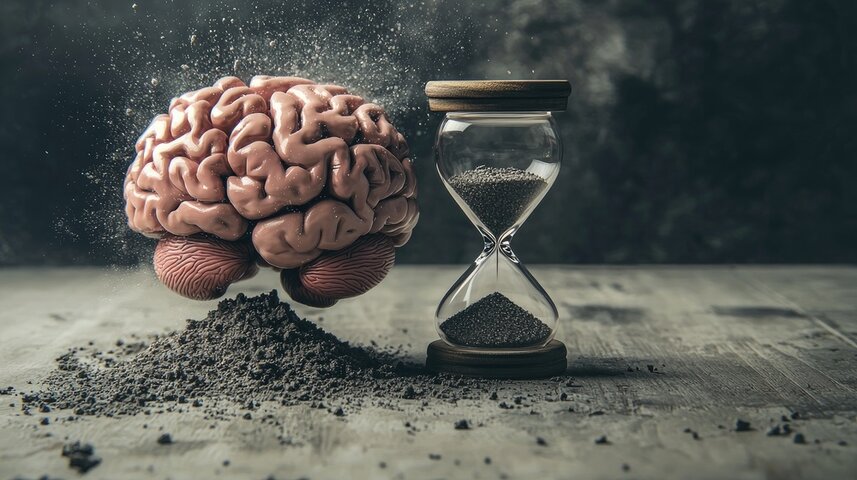
Your birth certificate may say 65 years old, but your brain may be functioning as if it were ten years younger—or older—depending on the experiences and habits that shape your daily life. A team from the University of Florida reports that optimism, regular, good sleep, strong social ties, and similar positive influences are closely linked to a healthier brain profile. Their findings suggest that lifestyle choices and stress management can have a significant impact on the rate of brain aging, even in people living with chronic pain.
“These are things that people have some control over,” said Dr. Jared Tanner, a research professor of clinical and health psychology at the University of Florida and one of the study’s leaders. “You can learn to perceive stress differently. Poor sleep is very treatable. Optimism can be trained.”
Measuring Brain Age With MRI and Machine Learning
The study tracked 128 middle-aged and older adults, most of whom had chronic musculoskeletal pain related to knee osteoarthritis or a risk for it. Over a two-year period, the researchers used MRI scans processed by a machine learning model to estimate each participant’s “brain age” and compare it to their chronological age. The difference between the two, known as the brain age gap, provided a single measure of overall brain health.

Certain stresses, including chronic pain, lower income, limited education, and social disadvantages, were associated with brains that appeared older. However, these associations decreased over time. Instead, protective behaviors such as restful sleep, healthy body weight, effective stress management, avoiding tobacco, and nurturing supportive relationships showed a stronger and more lasting association with younger-appearing brains. Participants who reported the highest number of protective factors began the study with brains that appeared eight years younger than their actual age, and their brain aging continued to progress more slowly during the two-year follow-up period.
“The message is consistent across all of our studies: Health-promoting behaviors are not only associated with less pain and better physical functioning, but also appear to significantly enhance health,” said Dr. Kimberly Sibille, associate professor of physical medicine and rehabilitation at UF and lead author of the report. Sibille, Tanner, and colleagues at UF and other institutions published their findings in the journal Brain Communications.
Why Brain Age is Important for Long-Term Health
Brain age—how “old” our brain is compared to our actual age—is becoming increasingly important for long-term health. Unlike chronological age, which simply measures the number of years lived, brain age provides insight into how functional and structural the brain is at the moment. A brain can appear “younger” or “older” than its actual age, and this difference has a direct impact on cognitive performance. Studies show that a higher brain age than chronological age is often associated with memory problems, slowed thinking processes, and an increased risk of dementia, while a lower brain age indicates a strong cognitive reserve that counteracts age-related decline.
Brain age also serves as an early warning indicator for neurodegenerative diseases, even before clinical symptoms appear. This allows preventive measures such as cognitive training programs, physical activity, healthy eating, adequate sleep, and stress management to be targeted. Interestingly, brain age not only reflects mental health, but is also closely related to general physical condition, such as cardiovascular health, metabolism, and inflammation levels in the body. Those who actively challenge their brains and keep them healthy can slow down brain aging, preserve cognitive abilities for longer, and improve their overall quality of life in old age. This makes it clear that brain age is not only a measure of mental performance, but also an important indicator of the long-term health of the entire organism.
Promoting Positive Habits
Researchers have known for years that aging brains are more susceptible to cognitive decline, dementia, and Alzheimer’s disease. Previous studies often examined isolated regions of the brain, but pain, stress, and traumatic life events typically affect far-reaching neural networks. The brain age gap—the difference between a person’s actual age and the age indicated by their brain in imaging—provides a single metric that reflects these broader effects.
Although the research focused on people with chronic pain, the authors point out that habits such as reducing stress, strengthening social support, and maintaining healthy sleep habits are likely to have positive effects on brain aging for a wide range of people. “For every additional health-promoting factor, there is literally evidence of a neurobiological benefit,” Sibille said. “Our findings support the growing body of evidence that lifestyle is medicine.”
Related Posts
-

People in their early middle age who have poor sleep quality, including difficulty falling or…
-
Selenium minerals can inhibit your brain aging and memory loss. A study by the University…
-
As we age and our sleep patterns naturally change, we can see some unexpected side…