
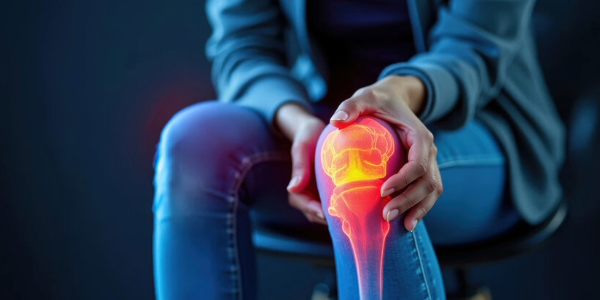
Exercise is often recommended as the first line of treatment for many forms of osteoarthritis. However, there is growing evidence that its benefits may not be as significant or long-lasting as previously thought. Although exercise has been examined in many systematic reviews, there has not been a single analysis that directly compared all available evidence with placebo, standard treatment, no treatment, medication, other therapies, or surgery.
A comprehensive (overarching) systematic review and pooled analysis, published in the open-access journal RMD Open, suggests that exercise therapy may provide only minimal and short-term relief from the symptoms of osteoarthritis. In some cases, the benefits are little different from those of no treatment. The researchers say these findings challenge the common practice of recommending exercise as the first line of treatment for pain relief and improved mobility in people with this degenerative joint disease. They also argue that it may be time to rethink research priorities in this area.
Osteoarthritis Often Develops Gradually
Osteoarthritis is a chronic joint disease in which the joint cartilage gradually breaks down and the affected joints become stiffer and more painful. Normally, the cartilage acts as a cushion and shock absorber between the bones, allowing movements to occur smoothly. In osteoarthritis, this cartilage becomes thinner, loses its elasticity, and can crack. At the same time, the synovial fluid that lubricates the joints often changes, and the bones react with thickening or so-called osteophytes. The consequences are pain, restricted movement, and, over time, increasing joint deformation.
The development of osteoarthritis is usually multifactorial. Common causes include natural wear and tear with age, excessive strain due to obesity or intense physical activity, joint injuries, malalignment, or genetic factors that impair cartilage stability. Inflammatory processes can also accelerate cartilage degradation.
The risk of developing osteoarthritis increases significantly with age. The first symptoms usually appear between the ages of 40 and 50, with women being particularly affected after menopause. From the age of 60, the prevalence increases significantly, so that many older people show at least slight changes in their joints. Nevertheless, osteoarthritis and its symptoms can also occur in younger people, especially after injuries or when certain joints such as the knees or hips are subjected to heavy strain.
Large-Scale Analysis Involving Thousands of Patients
To fill this gap, the team searched research databases for systematic reviews and randomized clinical trials published up to November 2025. Their final analysis included 5 reviews with 8631 participants and 28 randomized clinical trials with 4360 participants with knee or hip osteoarthritis (23), hand osteoarthritis (3), and ankle osteoarthritis (2).
When the results were summarized, it was found that exercise led to only minor and short-term pain relief in knee osteoarthritis compared to placebo or no treatment. The researchers point out that the overall certainty of this evidence was very low. In larger studies and those in which patients were observed over a longer period of time, the benefits appeared to be even smaller. For hip osteoarthritis, evidence of moderate certainty suggested a negligible improvement. For hand osteoarthritis, the data suggested minor effects.
How Exercise Compares to Other Treatments
The review also found that exercise generally had about the same effect as patient education, manual therapy, pain medication, steroid or hyaluronic acid injections, and keyhole knee surgery (arthroscopy), although the certainty of the evidence varied. In some individual studies focusing on specific patient groups, exercise was less effective in the long term than knee bone reshaping surgery (osteotomy) or joint replacement.
The authors acknowledge certain limitations. They prioritized certain reviews for inclusion, which means that some relevant studies may not have been part of the main analysis. However, when they examined the effect sizes from these other reviews, the results were similar.
They also point out that many studies did not include direct comparisons, participants differed greatly in terms of the severity of their symptoms, and some studies allowed additional treatments alongside exercise.
Rethinking Initial Treatment for Joint Pain
Despite these caveats, the researchers conclude: “We found largely inconclusive evidence for the effectiveness of exercise in osteoarthritis, suggesting that the effects on pain and function in different types of osteoarthritis are negligible or, at best, short-lived compared to placebo or no treatment. These effects appear to be less pronounced in larger and longer-term studies.
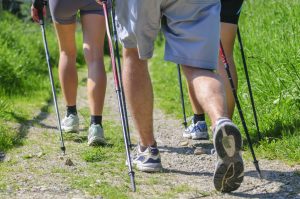
Our findings call into question the general promotion of exercise therapy as the sole focus of initial treatment to improve pain and physical function in all patients with osteoarthritis.” At the same time, they emphasize that exercise offers health benefits beyond the relief of joint pain and that some patients may still prefer it. Even if exercise does not always significantly improve pain or joint function in osteoarthritis, it still offers numerous other health benefits that go beyond the affected joint:
- Strengthening the heart and circulation: Regular exercise lowers blood pressure, improves blood circulation, and reduces the risk of cardiovascular disease.
- Muscle building and stability: Stronger muscles relieve pressure on joints, improve balance, and reduce the risk of falls, especially in older people.
- Weight management: Activity helps maintain or lose weight, which particularly reduces stress on the knees and hips.
- Metabolism and blood sugar: Exercise supports a healthy metabolism, lowers the risk of diabetes, and promotes fat loss.
- Mental health: Physical activity reduces stress, improves mood and sleep quality, and can prevent depression.
- Overall mobility and quality of life: Exercise keeps joints flexible, increases endurance, and contributes to a more active everyday life.
Doctors and patients should make decisions together, weighing the effectiveness of exercise on pain and function alongside secondary health benefits, safety, low cost, stage of treatment, and alternative treatment options, the researchers advise.
Conclusion
In osteoarthritis, joint wear itself can hardly be reversed, so treatment is primarily aimed at relieving pain and maintaining function. This includes medication for pain and inflammation, targeted physical therapy to stabilize the muscles, orthopedic aids such as bandages or insoles, and weight reduction to relieve the joints. In advanced cases, joint injections or joint replacement may be necessary. In addition, heat or cold therapy, massage, and relaxation techniques can reduce symptoms.