
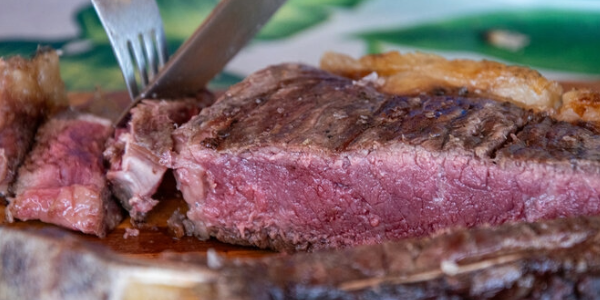
Older adults who carry genes associated with an increased risk of Alzheimer’s disease may not experience the expected decline in cognitive function if they consume relatively large amounts of meat. This is the key finding of a new study by researchers at the Karolinska Institute, published in JAMA Network Open. The findings suggest that dietary recommendations could be tailored more precisely to an individual’s genetic profile in the future.
How Meat Consumption and Dementia Risk are Linked
The APOE gene plays a key role in determining Alzheimer’s risk. In Sweden, about 30 percent of people carry the APOE 3/4 or APOE 4/4 gene combinations. Among those diagnosed with Alzheimer’s, nearly 70 percent have one of these variants. Last year, the Swedish Food Agency reviewed the existing research on diet and dementia and called for further studies to better understand how meat consumption might affect dementia risk.

“This study investigated the hypothesis that people with APOE 3/4 and 4/4 have a lower risk of cognitive decline and dementia with higher meat consumption, based on the fact that APOE4 is the evolutionarily oldest variant of the APOE gene and may have emerged at a time when our evolutionary ancestors had a diet that was more animal-based,” said lead author Jakob Norgren, a researcher at the Institute of Neurobiology, Nursing Science, and Society at Karolinska Institutet. The study followed more than 2,100 adults participating in the Swedish National Study on Aging and Care, Kungsholmen (SNAC-K). All participants were at least 60 years old and free of dementia at the start of the study. They were followed for up to 15 years. The researchers analyzed self-reported dietary habits alongside measures of cognitive health, taking into account factors such as age, gender, education, and lifestyle.
Among participants who consumed less meat, those with the APOE variants 3/4 and 4/4 had more than twice the risk of developing dementia compared to individuals without these gene variants. However, this increased risk was not observed in the group that consumed the most meat. In this group with the highest consumption, the median was about 870 grams of meat per week, equivalent to a daily energy intake of 2,000 calories.
“Those who ate more meat overall showed a significantly slower cognitive decline and a lower risk of dementia, but only if they had the APOE 3/4 or 4/4 gene variants,” explained Jakob Norgren. He continued: “There is a lack of dietary research on brain health, and our findings suggest that conventional dietary recommendations may be unfavorable for a genetically defined subgroup of the population. For those who know they belong to this genetic risk group, the results offer hope; the risk may be influenced by lifestyle changes.”
Processed vs. Unprocessed Meat—a Key Factor
The type of meat also appeared to play a role. “A lower proportion of processed meat in total meat consumption was associated with a lower risk of dementia, regardless of APOE genotype,” said Sara Garcia-Ptacek, assistant professor at the same institute, who is the study’s last author along with lecturer Erika J. Laukka. The researchers also identified broader health implications. In a follow-up analysis, individuals with APOE 3/4 and 4/4 who consumed more unprocessed meat had a significantly lower risk of dying from any cause.
The observed difference between processed and unprocessed meat—even among individuals with genetic risk factors such as APOE 3/4 or 4/4—is most likely not explained by a single mechanism, but rather by the interaction of multiple biological effects. A key point is that processed meat (e.g., sausage, bacon, ham) often contains additives such as nitrites and nitrates. These can be converted in the body into so-called N-nitroso compounds, which are associated with oxidative stress and inflammatory processes. Chronic inflammation, in turn, is considered a major driver of neurodegenerative diseases such as Alzheimer’s disease. In addition, many highly processed meat products contain high amounts of salt and saturated fats, which increase the risk of vascular damage. Such vascular changes also play a role in dementia, as they can impair blood flow to the brain.
In contrast, unprocessed meat (e.g., fresh beef, poultry, or lamb) is free of these additives and provides important nutrients such as high-quality protein, iron, zinc, and vitamin B12. These nutrients are essential for nervous system function and blood formation. Vitamin B12 is particularly relevant, as a deficiency is associated with cognitive decline. Furthermore, unprocessed meat contains fewer pro-inflammatory substances than processed meat, meaning it is less likely to put the body into a chronic state of inflammation. Another important aspect concerns people with APOE-ε4. This variant is associated with altered fat metabolism and an increased susceptibility to inflammation. As a result, carriers of this genotype may be more sensitive to unfavorable dietary factors. Processed meat could further exacerbate this pre-existing tendency toward inflammation and vascular damage, whereas unprocessed meat—in moderate amounts—tends to have a neutral or even beneficial effect because it provides necessary nutrients without the same harmful byproducts.
Since this is an observational study, it cannot prove a causal relationship. More rigorous intervention studies are needed to confirm whether dietary changes directly influence the risk of dementia. “Clinical studies are now needed to develop dietary recommendations tailored to the APOE genotype,” says Norgren. “Since the prevalence of APOE4 in the Nordic countries is about twice as high as in Mediterranean countries, we are particularly well-suited to conduct research on tailored dietary recommendations for this at-risk group.”
Facts About the APOE Gene
Apolipoprotein E plays a key role in the transport of cholesterol and fats in both the brain and the bloodstream. It is produced primarily in the liver, but also in the brain by so-called astrocytes, and serves as a transport molecule for cholesterol and other lipids. These fats are essential for the formation and stability of cell membranes as well as for the function of nerve cells. APOE is particularly important in the brain, as it not only distributes lipids there but is also involved in nerve cell repair processes and supports the breakdown of harmful protein deposits.

The APOE gene has three main forms: Epsilon 2, 3, and 4. These variants influence the likelihood of developing Alzheimer’s disease and cardiovascular diseases. Every person inherits two copies of the gene, one from each parent, resulting in six possible combinations (genotypes): 2/2, 2/3, 2/4, 3/3, 3/4, and 4/4. Compared to the most common genotype, 3/3, having one copy of the 4 variant increases the risk of Alzheimer’s by three to four times, while two copies increase the risk by ten to fifteen times. The 2 variant is associated with a lower risk. However, these risk values may vary depending on the ethnic group.
The increased risk associated with ε4 is explained by several biological mechanisms. For instance, this variant appears to be less efficient at clearing amyloid-beta, a protein that accumulates in the brain in Alzheimer’s disease and forms so-called plaques. Additionally, it is believed that ε4 exacerbates inflammatory processes in the brain, impairs the function of the blood-brain barrier, and disrupts lipid transport within the nervous system, which in turn hinders the regeneration of nerve cells. In contrast, ε2 may have protective effects by influencing these processes in a more favorable way.
In addition to its role in the brain, APOE also influences blood lipid levels. The ε4 variant, in particular, is frequently associated with elevated LDL cholesterol levels and can increase the risk of cardiovascular diseases such as atherosclerosis. The ε2 variant, on the other hand, is often associated with lower cholesterol levels but can, in rare cases, lead to specific lipid metabolism disorders. Interestingly, the frequency of individual APOE variants varies across different population groups, and their impact on disease risk can also differ depending on genetic background and environmental factors.
From an evolutionary perspective, ε4 is considered the oldest variant of the gene and may have offered advantages in earlier environmental conditions, such as in the efficient utilization of dietary fats or in coping with infections. In today’s world, however, with higher life expectancy and changed living conditions, the long-term disadvantages of this variant are becoming more pronounced. Overall, it is evident that APOE is a key factor at the intersection of metabolism, brain function, and aging processes, whose effects depend heavily on the interplay of genetic and environmental influences.