

Why do some people not develop Alzheimer’s despite a high genetic risk, while others develop changes in the brain at an early age? Two new research studies shed light on this question from different angles. One examines a rare genetic protective mechanism, while the other explores the potential benefits of daily physical activity. Taken together, the findings show that an individual’s Alzheimer’s risk is not determined by a single factor. In addition to genetic makeup, the condition of the blood vessels in the brain and regular physical activity could play an important role in when and how quickly the disease progresses.
A Risk Gene Does Not Necessarily Mean Alzheimer’s
A variant of the APOE gene, known as APOE ε4, is considered the strongest and most common genetic risk factor for Alzheimer’s. It is estimated that one in five people carries at least one copy of this gene variant. However, this does not mean that those affected will inevitably develop the disease. APOE ε4 merely increases the likelihood. Some carriers remain mentally sharp well into old age. It is precisely these individuals who are of particular interest to researchers: Apparently, their bodies possess additional protective mechanisms that can partially offset the genetic predisposition.

Scientists at Columbia University therefore investigated a rare mutation in the FN1 gene. This gene provides the blueprint for fibronectin, a protein found, among other places, in the vicinity of blood vessels. Previous studies had suggested that a specific FN1 mutation might protect people with APOE ε4 from Alzheimer’s. The new research now attempts to explain how this natural protection arises.
The Blood-Brain Barrier as a Sensitive Protective System
The blood-brain barrier controls which substances are allowed to pass from the blood into brain tissue. It protects the brain from harmful substances and helps maintain the stability of the sensitive environment surrounding nerve cells.
According to the new findings, APOE ε4 can cause excessive amounts of fibronectin to accumulate around the blood vessels of the brain. In mice carrying the human APOE-ε4 variant, the researchers found nearly twice as much fibronectin as in animals with the common APOE ε3 variant. At the same time, the blood-brain barrier was more permeable.
To test whether the protein was actually involved in the damage, the research team altered fibronectin production in certain support cells of the brain. These cells, known as astrocytes, support nerve cells and help maintain the blood-brain barrier.
Increased fibronectin production was sufficient to make the barrier more permeable. In contrast, when the amount of the protein was reduced, the barrier’s function improved. Thus, the experiments provide evidence that fibronectin is not merely a byproduct but may directly contribute to vascular damage.
Impaired Communication and Inflammatory Processes
Excess fibronectin also appears to alter communication between cells. Involved in this process are so-called integrins as well as the enzyme focal adhesion kinase. Both are part of signaling pathways through which cells perceive their environment and respond to it.
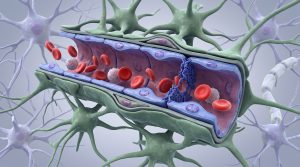
In human tissue and cerebrospinal fluid samples analyzed, a correlation was also observed between elevated fibronectin levels and inflammatory reactions in astrocytes. Genetic analyses further linked FN1 to vascular changes and to VEGFA. This growth factor is important, among other things, for the health and regulation of blood vessels.
The rare protective FN1 mutation could ensure that less harmful fibronectin accumulates in the brain’s blood vessels. As a result, the blood-brain barrier might remain intact for longer. In the long term, drugs could be developed that mimic this natural protective mechanism. Until then, however, further research is needed, particularly clinical trials involving humans.
Exercise Could Influence the Course of the Disease
While the genetic study describes a possible biological protective mechanism, another study focuses on a factor that people can, at least in part, influence themselves: daily physical activity. For this study, nearly 300 older adults were observed over a period of nine to eleven years. Early changes in the brain typical of Alzheimer’s disease were already detectable in these participants. Their physical activity was tracked using pedometers.
The results suggest that as few as 3,000 steps per day could be associated with a slower progression of certain changes and a reduced rate of cognitive and functional decline. The researchers observed the greatest benefit at approximately 5,000 to 7,500 steps per day. Above this range, the observed benefit did not increase significantly.
The study thus puts the often-cited goal of 10,000 steps into perspective. For older adults or those who have been relatively inactive, a significantly lower and more realistically achievable level of physical activity may already be beneficial. Depending on pace, stride length, and daily routine, about 3,000 steps can correspond to roughly half an hour of walking.
Physical Activity Did Not Eliminate Amyloid Deposits
It is noteworthy to consider how the physical activity might have had an effect. The more physically active individuals did not automatically have fewer amyloid plaques. These protein deposits often form early in the disease process and are the focus of various Alzheimer’s therapies.

Instead, exercise was associated with a slower accumulation of altered tau proteins in certain brain regions among individuals who already had amyloid deposits. Tau abnormalities typically occur later and are more closely linked to the loss of mental and daily living skills.
Among the more active participants, the observed cognitive and functional decline was nearly half as severe. However, this does not mean that going for a walk is guaranteed to halve the progression of Alzheimer’s. The study initially shows a statistical association and not definitive proof of cause and effect.
Why Physical Activity Might Help the Brain
Exercise can support the brain in several ways. It has a positive effect on blood circulation, blood pressure, metabolism, and vascular health. In addition, active muscles release various neurotransmitters.
These substances include, among others, irisin and the growth factor BDNF. They are associated with neural plasticity, anti-inflammatory processes, and the health of nerve cells. Such mechanisms could explain why physical activity can be beneficial even when changes typical of Alzheimer’s disease are already present.
An additional benefit: walking is easier for many people to incorporate into their daily lives than a structured exercise program. Walks, walking to destinations, gardening, or several short bursts of activity can help gradually increase the number of steps taken.
What the Results Do Not Prove
Both studies offer interesting insights but have clear limitations. The findings regarding the fibronectin mechanism are based in part on cell and animal experiments. It remains to be seen whether a treatment that influences this signaling pathway would be safe and effective in humans.
The exercise study was also relatively small, with just under 300 participants. The group studied consisted predominantly of white, well-educated people in the U.S. and therefore does not necessarily represent the general population. Furthermore, active and less active individuals may differ in other respects, such as diet, pre-existing conditions, social contacts, or general fitness.
The figure of 3,000 steps should therefore not be interpreted as a medical threshold. It does not mean that less exercise is ineffective, nor does it mean that a specific number of steps prevents or treats Alzheimer’s disease.
Genes and Lifestyle Are Not Opposites
The two studies illustrate that genetic predisposition and lifestyle should not be considered in isolation from one another. Genes can influence the biological baseline but do not determine future development in every case. At the same time, exercise cannot reliably prevent a disease and cannot simply eliminate a genetically increased risk.
Nevertheless, these two areas of research could converge in the long term: A better understanding of natural protective mechanisms could lead to new medications, while regular exercise remains a low-threshold supplement to preventive care.
For everyday life, one message is particularly relevant: Every additional step can be a meaningful start. People with health issues, limited mobility, or existing cardiovascular diseases should consult a doctor beforehand to determine the appropriate scope and intensity of new exercise programs.