
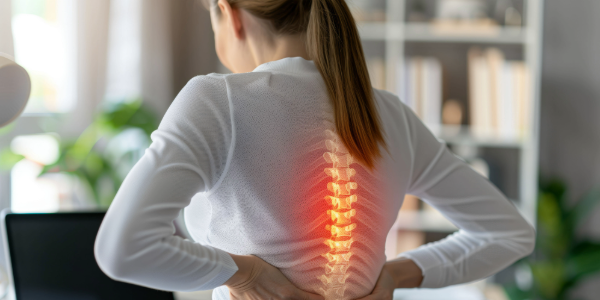
When it comes to the health consequences of menopause, osteoporosis is often the main focus. As estrogen levels decline, bone loss can increase, raising the risk of fractures. Osteoporosis is a skeletal disorder in which bones progressively lose density and stability. Their internal structure becomes more porous, making them more prone to breaking—sometimes even from everyday activities or a minor fall. The condition usually develops gradually and often goes unnoticed for a long time.
In contrast, less attention is paid to spinal health. Yet as we age, intervertebral discs, cartilage, and other structures that ensure mobility and stability also undergo changes. A research study published in the scientific journal Communications Biology examines the causes of certain changes in the spine. The scientists also investigated an active ingredient that is already used to treat osteoporosis.
Why the Spine Becomes More Vulnerable with Age
Estrogen affects not only the female menstrual cycle but also bone metabolism and various tissues in the body. During menopause, estrogen production drops significantly. This can disrupt the balance between bone formation and bone resorption. The result is an increasing loss of bone mass. The risk of osteopenia and osteoporosis increases, especially after menopause.
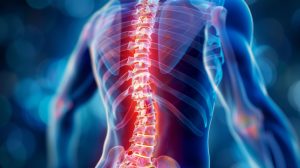
However, the intervertebral discs are also subject to age-related changes. They are located between the individual vertebral bodies and act as shock absorbers. They distribute stress and enable the spine to move. Over the years, they can lose water content and elasticity. This alters their ability to absorb pressure. The role that hormonal changes play in these processes has not yet been fully elucidated. What is clear, however, is that spinal health involves far more than just bone density.
What the New Study Found
For their research, scientists at the University of Edinburgh and the University of Bristol used genetically modified zebrafish. In these fish, a gene important for the formation of collagen IX had been altered. This structural protein contributes to the stability and function of cartilage tissue and also plays a role in the intervertebral discs.
Over the course of the study, the fish developed pathological changes in their spines. The scientists observed mineral deposits in tissues that are normally supposed to remain flexible. In some cases, adjacent vertebrae even fused together.
Further analyses showed that various metabolic processes were involved. Among other things, changes were found in phosphate and fat metabolism. Phosphate, together with calcium, is an important component of bones. For mineralization to function properly in the body, phosphate balance must be precisely regulated.
Osteoporosis Drug Prevented Changes
In the next step, the scientists investigated the effect of bisphosphonates. These drugs have been used to treat osteoporosis for many years. They slow the activity of bone-resorbing cells and can thus help maintain bone density. In zebrafish, the bisphosphonates were able to prevent the pathological mineral deposits.
This represents a new approach for research: These active ingredients may influence not only bone resorption but also certain processes involved in pathological changes to the spine. However, these results are based exclusively on an animal model so far. Further studies are needed to determine whether the effects can be extrapolated to humans. The study also does not prove that bisphosphonates can prevent intervertebral disc damage in women.
Why This Topic Is Important for Postmenopausal Women
After menopause, the risk of osteoporosis increases. Many women do not initially notice the loss of bone mass, as the disease can progress for years without noticeable symptoms. In addition to their bones, women should also keep an eye on their muscles and the health of their spine. Weaker core muscles, lack of exercise, and age-related changes can impair the back’s ability to withstand stress.

Back pain can have various causes. It is often due to muscle tension, lack of exercise, weak core muscles, or improper posture. Prolonged sitting, repetitive movements, and stress can also contribute to the discomfort. With advancing age, signs of wear and tear on the intervertebral discs and vertebral joints often develop. In postmenopausal women, osteoporosis can also play a role: If the vertebral bodies become unstable due to bone loss, they can fracture more easily and cause severe back pain. However, not every change in an intervertebral disc automatically leads to symptoms. Therefore, if you experience persistent, sudden severe, or unexplained back pain, you should seek medical evaluation.
What Women Can Do for Their Bones and Back
Even without new medications, there are steps you can take to maintain a healthy musculoskeletal system. Regular exercise and strength training are especially important during and after menopause.
- Strength training: It strengthens the muscles and provides important stimuli for bone metabolism.
- Regular exercise: Walking, hiking, and dancing promote mobility and balance.
- A calcium-rich diet: Calcium is an important building block of bones. Good sources include dairy products, green vegetables, and calcium-rich mineral water.
- Vitamin D: It supports calcium absorption and helps maintain normal bone health.
- Assess your risk of osteoporosis: If you have a family history of osteoporosis, early menopause, or other risk factors, it may be advisable to consult a doctor.
What Does this Mean for the Future?
Research shows that several metabolic processes interact in certain spinal changes. The fact that bisphosphonates were able to prevent pathological mineral deposits in zebrafish experiments provides a starting point for further investigations. However, there is still a long way to go before this could lead to a potential treatment for humans. First, it must be determined whether the observed processes play a comparable role in humans as well.
For women going through menopause, it therefore remains particularly important to consider the health of bones, muscles, and the spine as a whole. The decline in estrogen levels makes bone health a central concern during this phase of life. Exercise, targeted strength training, and an adequate intake of essential nutrients can help maintain mobility in the long term. Important: Bisphosphonates should not be taken on their own to prevent intervertebral disc damage. They are medications used to treat specific bone diseases and must be prescribed by a doctor.