

A recently published study reports that prescribing hearing aids to people with moderate hearing loss did not result in any measurable improvements in standard tests of memory and thinking ability. The study was published in Neurology, the medical journal of the American Academy of Neurology.
Why Hearing Loss is so Common in Old Age
Hearing loss becomes more common with age because the sensitive structures of the hearing organ wear out and gradually degenerate over many years. This age-related hearing loss is known as presbycusis. A key cause is the wear and tear of the hair cells in the cochlea in the inner ear. These sensory cells convert sound waves into electrical signals for the brain. Since they do not regenerate in humans, decades of exposure to stressors such as everyday noise, traffic, music, or occupational noise exposure lead to gradual damage. High frequencies are affected first, which is why older people often have difficulty understanding high-pitched sounds or speech in noisy environments.
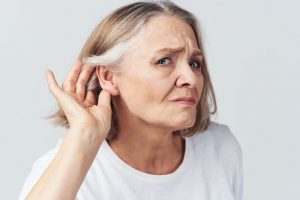
In addition, blood circulation and metabolism in the inner ear deteriorate with age. Small blood vessels can harden or narrow, preventing the sensitive structures from receiving an optimal supply of oxygen and nutrients. Changes in the auditory nerve and in the auditory centers of the brain also play a role, as the processing of acoustic stimuli becomes slower and less precise. In addition to these natural aging processes, comorbidities such as diabetes, high blood pressure, or cardiovascular disease, as well as certain medications, contribute to further impairment of hearing. Overall, age-related hearing loss is therefore the result of a combination of biological aging, long-term exposure to noise, and health risk factors.
Tracking Cognitive Health Over a Seven-Year Period
Previous research has shown that hearing loss can increase the risk of memory and thinking problems, including dementia. However, less is known about the effects of treating hearing loss with hearing aids on brain health,” said study author Dr. Joanne Ryan of Monash University in Melbourne, Australia. “Our study followed people with hearing loss, some of whom were prescribed hearing aids and others who were not, and found that cognitive scores were similar in both groups. However, we also found that hearing aids were associated with a lower risk of dementia.”
The study followed 2,777 adults in Australia who were on average about 75 years old at the start of the study and did not have dementia. All participants reported having moderate hearing loss, defined as self-reported hearing problems, and none of them had previously used hearing aids. During the study period, 664 participants received a prescription for hearing aids. These individuals were asked how often they used their devices.
Participants were followed for seven years and completed cognitive tests each year. The tests assessed abilities such as memory, language skills, and mental processing speed. Over the course of the study, 117 participants developed dementia. The researchers compared the results between individuals who used hearing aids and those who did not. Overall, the average scores on memory and thinking tests remained similar in both groups throughout the study. The use of hearing aids was not associated with higher cognitive test scores.
Hearing Aids are Associated With a Lower Risk of Dementia
When the researchers focused on dementia risk rather than test scores, a different pattern emerged. After taking into account factors such as age, gender, and health conditions, including diabetes and heart disease, they found that 5% of participants who had received hearing aids developed dementia during the study. In comparison, 8% of those without hearing aids developed dementia. This difference represented a 33% lower risk of dementia among people who had been prescribed hearing aids.
Ryan noted that the contrast between stable test results and a reduced risk of dementia was unexpected. “One factor could be that most study participants had good cognitive health at the start of the study, which reduced the potential for improvement through hearing aids.” The researchers also examined cognitive impairment, a category that includes both cognitive decline and dementia. After statistical adjustments, 36% of participants who had been prescribed hearing aids developed cognitive impairment, compared to 42% of those who had not received hearing aids. This corresponded to a 15% lower risk. The analysis also showed that more consistent use of hearing aids was associated with a steadily decreasing risk of developing dementia.
What the Results Suggest
“Although we did not find a difference in cognitive scores, our study suggests that the use of hearing aids in older adults with hearing loss may reduce the risk of dementia and cognitive impairment, thereby benefiting brain health,” Ryan said.
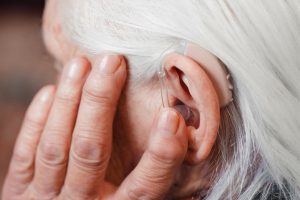
There are several possible explanations for why hearing aids may have a protective effect. One important mechanism is known as “cognitive load.” When hearing is impaired, the brain has to expend significantly more energy to decode speech. This constant extra effort could tie up resources needed for memory and thinking in the long term. Hearing aids improve the acoustic signal, so the brain has to “compensate” less. Another aspect is social participation. Hearing loss often leads to withdrawal from conversations, social activities, and social life. Social isolation, in turn, is considered a risk factor for dementia. By facilitating communication, hearing aids can help maintain social contacts—which can have a positive effect on mental health.
There is also evidence that prolonged acoustic under-stimulation—i.e., too few auditory stimuli—can lead to structural changes in the brain, for example in areas responsible for language processing and memory. Better hearing care could help keep these areas active. Further studies are needed to understand how hearing aids can support memory, thinking, and overall brain health. The researchers emphasized that the results show a correlation rather than proof that hearing aids directly prevent dementia.
One limitation of the study is that most participants were relatively healthy and had strong cognitive abilities at the start. Therefore, the results may not be transferable to people with poorer health or existing memory problems. The research was funded by the National Institutes of Health, the National Institute on Aging, the Australian government, and Monash University.
Related Posts
-

Dementia is a debilitating disease that slows down or even stops your cognitive functions, leaving…
-
-
New research finds that Individuals with psychotic disorders may stand at a greater risk of…