Retinol creams may attract the most attention in the fight against visible signs of aging, but researchers at Edith Cowan University (ECU) have pointed to a far greater and more adventurous option: travel. In an interdisciplinary study published in 2024 in the Journal of Travel Research, the ECU researchers applied entropy theory to tourism and proposed the hypothesis that positive travel experiences can promote physical and mental health in ways that help slow down some signs of aging. The study does not suggest that travel can stop aging, but rather views tourism as more than just a break from everyday life. It can be a way to help the body maintain its balance, resilience, and ability to regenerate.
How Travel Might Influence Aging
The question of how travel can influence aging can be examined from various scientific perspectives and draws on insights from biology, psychology, and health research. The starting point is often the concept of entropy, which is frequently described as the universe’s tendency toward disorder. In the context of health, researchers assume that experiences can either support or impair the body’s ability to remain organized and function well. In this sense, positive travel experiences can help counteract this tendency toward disorder, while stressful or uncertain journeys can push the body in the opposite direction. At the same time, aging is an irreversible process: it cannot be stopped, but its pace can be influenced.
Travel can be understood as a potentially regulating factor that operates on multiple levels. According to ECU doctoral candidate Fangli Hu, travel can improve well-being by placing people in new environments, promoting physical activity, enhancing social interaction, and evoking positive emotions. These aspects are interlinked and have an impact on both the physical and psychological levels. On a biological level, stress reduction plays a particularly central role. Chronic stress leads to increased release of hormones such as cortisol, which in the long term can promote inflammatory processes and accelerate cellular aging. Positive travel experiences, on the other hand, are often accompanied by relaxation, joy, and a sense of distance from everyday life, which can lower stress levels and thus have protective effects on the body.
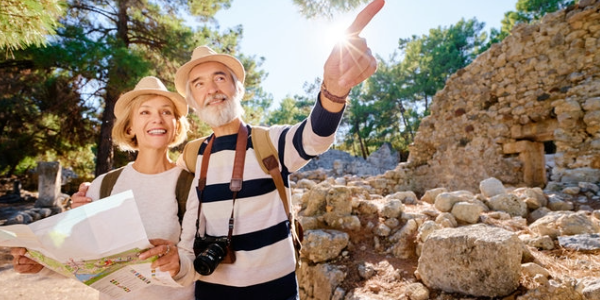
Another important factor is the physical activity associated with many forms of travel. Whether exploring a city, hiking in nature, or engaging in other activities—movement supports the cardiovascular system, improves metabolism, and contributes to overall physical fitness. At the same time, the brain is stimulated by new impressions, unfamiliar situations, and cultural experiences. This is closely linked to neuroplasticity, i.e., the brain’s ability to adapt and form new neural connections. Well-preserved neuroplasticity is associated with higher cognitive performance and a lower susceptibility to age-related cognitive decline.
In addition to biological effects, psychological and social factors also play a decisive role. Travel can evoke positive emotions such as joy, curiosity, and inspiration, thereby enhancing overall well-being. At the same time, it fosters social interactions, whether through encounters with new people or through spending more quality time with fellow travelers. Such social contacts serve as an important protective factor against loneliness and psychological stress. Furthermore, experiencing new cultures and perspectives can contribute to a stronger sense of purpose and personal development. These connections are also reflected in concepts such as wellness tourism, health tourism, or yoga tourism, which are specifically designed to combine travel with health benefits. In this context, it becomes clear that tourism not only serves leisure and recreation but can also make an active contribution to physical and mental health. Nevertheless, it must be noted that not every form of travel is automatically health-promoting. Stressful travel conditions, time pressure, lack of sleep, or uncertainty can strain the body and weaken the positive effects or even reverse them. Factors such as jet lag or sensory overload can lead to increased stress in the short term and thus intensify processes associated with accelerated aging.
Travel Therapy and the Body’s Defense Systems
From an entropic perspective, travel therapy could become a meaningful health measure. The idea behind this is that positive travel experiences, as part of a person’s environment, can help the body maintain a healthier state with lower entropy by influencing four key bodily systems. Travel often combines an unfamiliar environment with relaxing experiences. New environments can stimulate the body, increase metabolic activity, and help activate self-organizing processes that ensure the smooth functioning of biological systems. These experiences can also stimulate the adaptive immune system, which helps the body recognize and respond to external threats. Ms. Hu noted that this response improves the body’s ability to perceive external threats and defend against them. “Simply put, the immune system becomes more resilient. Hormones that promote tissue repair and regeneration can be released and support the function of the self-healing system.”
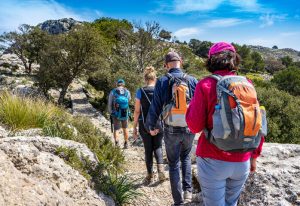
Relaxing travel activities can also help reduce chronic stress and calm an overactive immune response. Leisure activities can relieve tension and fatigue in muscles and joints, support metabolic balance, and strengthen the body’s resilience against wear and tear. This is important because travel rarely consists of just standing still. Travel often involves walking through cities, hiking, climbing, cycling, or simply spending more time on one’s feet than usual. This physical activity can boost metabolism, energy expenditure, and nutrient transport in the body. All of this can support the systems that repair the body and keep it resilient.
Participating in these activities could improve the body’s immune function and self-defense capabilities and strengthen its resilience against external risks. Physical activity can also improve blood circulation, accelerate nutrient transport, and support the elimination of waste products, all of which work together to maintain an active self-healing system. Moderate exercise is not only beneficial for bones, muscles, and joints, but also supports the body’s defense system against wear and tear.
An Area Still Under Development
One area that is still very much under development is so-called “travel therapy,” that is, the targeted use of travel to promote health and well-being. Since the 2024 study, this approach has been further explored and examined in greater detail in several more recent works. A research report from 2025 by Hu and colleagues describes travel therapy as an emerging approach in which positive travel experiences can improve well-being. At the same time, however, it emphasizes that a nuanced perspective is necessary, as potential benefits must always be weighed against possible risks. This makes it clear that while travel can have health-promoting effects, these do not occur automatically and depend heavily on individual factors as well as the type of travel.
This development reflects a growing scientific interest, which is also evident in other studies. For instance, another article from 2025 called for closer collaboration between travel medicine and tourism research. The goal is to better understand the intersections between vacation, health risks, prevention, and the general well-being of travelers. Especially in a globalized world where mobility is increasing, this interplay is gaining in importance. Travel medicine traditionally focuses more on risks such as infectious diseases or vaccination prevention, while the tourism sector is more focused on recreation and experience. Combining these two perspectives opens up new possibilities for making travel not only safer but also specifically health-promoting.
A systematic review from 2025 also concludes that tourism and healthy aging are increasingly understood as an interdisciplinary field of research. This field combines aspects of public health, psychology, and the social sciences, among others. At the same time, however, it is emphasized that the existing body of research is still limited. Many studies are based on small samples or short-term observations, so the long-term effects of travel on aging processes have not yet been conclusively demonstrated. There is therefore a need for more robust research methods, such as long-term studies or standardized measurement procedures, to better quantify the actual effects.
Given these unresolved questions, it is prudent to interpret the findings to date with caution. There is ample evidence that travel can offer real health benefits, particularly when it involves physical activity, social interaction, new experiences, and adequate rest. These factors have a positive impact on key processes such as stress regulation, mental well-being, and even biological mechanisms like cellular aging. At the same time, it remains unclear how strong these effects are compared to other health-promoting measures and which groups of people benefit most from them. For example, age, health status, type of travel, or social integration could play a decisive role.
The Risks Behind the Benefits
The same study also warns that travel is not automatically healthy. Tourists may face infectious diseases, accidents, injuries, violence, unsafe food or water, as well as other risks associated with poor planning or inappropriate travel decisions. Conversely, tourism can entail negative experiences that potentially lead to health problems and correspond to the process of promoting an increase in entropy. A prominent example is the COVID-19 health crisis.
The central message is not that every trip slows down aging. Rather, positive travel experiences can help the body and mind function better by combining novelty, relaxation, physical activity, and social interaction. When travel is safe, restful, and active, it can do more than just create memories. It could help support healthier aging from the inside out.
Related Posts
-

There comes a time when you must face the music. As you get older, so…
-
The proper use of the mineral zinc may slow the aging of skin in middle-aged…
-
Aside from their use in gardening, seeds have incredible health benefits and prevent diseases in…