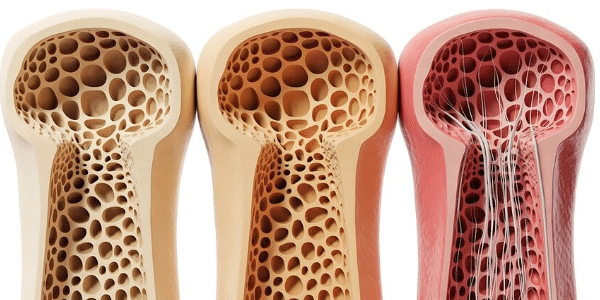
Osteopenia is a common but often overlooked condition in which bone density decreases and bones become more fragile. Because it develops gradually, many people do not realize they have it until after a bone fracture or a bone density test. Aging, menopause, an unhealthy diet, and a lack of exercise can contribute to bone loss. Fortunately, this loss can be slowed or even partially reversed through exercise, an adequate intake of calcium and vitamin D, and other healthy lifestyle habits.
What is Osteopenia?
Worldwide, about 40% of adults are affected by osteopenia—a loss of bone mineral density. This condition is particularly common in postmenopausal women and older adults. According to estimates, more than 500,000 bone fractures occur annually in the United Kingdom due to low bone density. Osteopenia itself usually causes no symptoms and develops gradually over time. Many people may not even be aware that they have it until they suffer a fracture or undergo a bone density test—which is typically recommended due to risk factors such as age and menopause. This makes osteopenia a significant but often underestimated public health problem.

Bone is a dynamic tissue that is constantly renewed through a process known as bone remodeling. During this process, old bone is broken down (resorption) and new bone is formed (formation). In early adulthood, this process is balanced, so that bone resorption equals bone formation. Bone mass typically peaks between the mid-20s and early 30s. After this peak, bone resorption gradually exceeds bone formation. Over time, this leads to a decrease in bone density. Aging is the most important risk factor for bone loss. However, several other factors can accelerate this process. For example, hormonal changes—particularly the decline in estrogen levels after menopause—can significantly increase bone resorption. This is because estrogen helps protect bones by slowing down the natural process of bone resorption. About one in two women over the age of 50 suffers a fragility fracture.
Lifestyle also plays an important role. Smoking, excessive alcohol consumption, and a lack of physical activity can contribute to reduced bone strength over time. Diet is equally important. Insufficient calcium intake and low vitamin D levels can limit the body’s ability to build and maintain strong bones.Certain medications, particularly long-term use of steroids, as well as conditions that affect hormone levels or nutrient absorption (such as Crohn’s disease or celiac disease), can further increase the risk.
How Can You Take Action?
Early detection of osteopenia is crucial. This allows you and your doctors to take steps that can reduce the risk of fractures and prevent osteopenia from progressing to osteoporosis, a condition in which bone loss is more advanced and the risk of fractures is significantly higher. Bone mineral density is typically measured using dual-energy X-ray absorptiometry (DXA). This is a type of low-dose X-ray examination used to assess bone strength. The results are usually reported as a T-score, which compares a patient’s bone density to that of a healthy young adult. A T-score between –1.0 and –2.5 indicates osteopenia, while a T-score below –2.5 meets the diagnostic threshold for osteoporosis.
Treatment for osteopenia generally aims to slow or prevent further bone loss and reduce the risk of fractures. This includes lifestyle changes (such as quitting smoking, limiting alcohol consumption, or maintaining a healthy body weight), dietary changes, and, in some cases, medication. Weight-bearing exercises such as walking, dancing, or jogging stimulate bone formation by placing stress on the skeleton. Strength training can further strengthen bones and muscles.
Studies show that regular physical activity is associated with improved bone mineral density and can reduce the risk of osteoporosis. Sports such as Tai Chi also improve balance and muscle strength, thereby reducing the risk of falls that could lead to bone fractures. Adequate calcium intake also supports bone structure, while vitamin D helps the body absorb calcium efficiently. Foods such as dairy products, green leafy vegetables, and fortified products are common dietary sources. If dietary intake is insufficient, dietary supplements may also be recommended. In the United Kingdom, vitamin D deficiency is relatively common, so supplementation is often recommended.
Early Detection and Targeted Lifestyle Changes are Essential
Osteopenia should not be viewed merely as a mild precursor to osteoporosis, but rather as an important warning sign from the body that offers the opportunity to take timely action. The progression from osteopenia to osteoporosis is by no means inevitable. Numerous scientific studies show that targeted measures can slow bone loss, stabilize bone density, and in some cases even improve it. It is crucial to take action as early as possible and to permanently incorporate the recommended changes into daily life.

Not everyone with osteopenia requires medication. Instead, doctors often use a fracture risk assessment tool to evaluate the 10-year probability of a fracture based on age, bone mineral density, steroid use, and other risk factors. If the fracture risk is high or if a person has already suffered a fragility fracture, medication may be recommended. This may include antiresorptive medications, which slow bone resorption and help maintain bone density. Such treatments are more commonly used for osteoporosis but can also benefit high-risk patients with osteopenia.
In some cases, bone density may even improve with appropriate treatment and lifestyle adjustments. Prevention, however, requires a long-term perspective. Maintaining a healthy body weight is also important, as both being severely underweight and certain nutritional deficiencies are associated with lower bone density. Regular medical checkups are another important component of preventive care. Bone density measurements can help detect changes early on and better assess an individual’s risk of fracture. Based on this, doctors can decide whether lifestyle measures are sufficient or whether additional therapeutic measures are necessary. People with additional risk factors, such as long-term corticosteroid treatment, hormonal changes, or chronic diseases, should have their bone health monitored particularly closely. Overall, it is clear that bone health is the result of many factors throughout a person’s entire life.
A combination of regular exercise, a balanced diet, an adequate intake of calcium and vitamin D, avoiding smoking, and responsible alcohol consumption represents the most effective strategy for protecting bones in the long term. Taking action as early as the osteopenia stage can often prevent bone loss from worsening, thereby significantly reducing the risk of osteoporosis and bone fractures later in life. Maintaining healthy habits over the long term remains the most effective strategy for preserving bone strength.
Related Posts
-

Joint pain doesn’t have to be an inevitable curse of growing older. There are many…
-
There is a high demand for safe and long-acting drugs to treat bone loss, medically…
-
At this point in time in the United States, there are a record breaking number…