
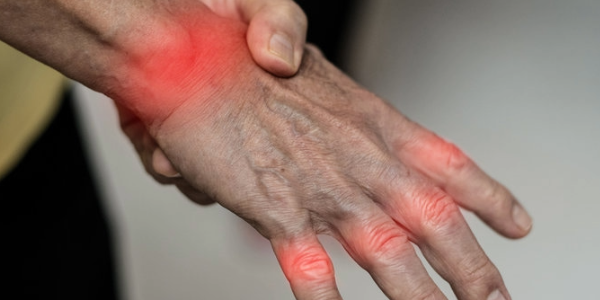
According to a new study, air pollution can cause rheumatoid arthritis to become more active and increase the likelihood of painful flare-ups. The strongest association was found with fine particulate matter (PM2.5), which is found in dust, soot, and smoke. The results, published in the Annals of the Rheumatic Diseases (ARD), the EULAR journal published by Elsevier, suggest that air quality could be an important factor for both healthcare professionals treating rheumatoid arthritis and policymakers working to protect public health.
Environmental Factors in Rheumatoid Arthritis
Rheumatoid arthritis, commonly known as RA, is a chronic autoimmune disease that causes inflammation and damage to the joints. It can also cause a wide range of symptoms affecting other parts of the body. Worldwide, an estimated 0.5% to 1% of adults are affected by this disease. Its development is influenced by a combination of genetic factors, changes in immune function, and environmental influences. Some of these environmental influences may not only contribute to the initial onset of RA but also to the exacerbation of symptoms after the disease has been diagnosed.

Importantly, several environmental risk factors are potentially modifiable. Smoking is already considered a significant risk factor. Researchers have also investigated the potential effects of temperature, humidity, quartz dust, and other pollutants. Previous population-based studies found that exposure to air pollution was associated with a higher likelihood of developing RA. Researchers in South Korea sought to determine whether air pollution could also influence disease activity and trigger flare-ups in people who already have the disease.
They also examined the biological processes that could explain such a link. In an accompanying editorial, Dr. Jeffrey A. Sparks, MMSc, of the Division of Rheumatology, Inflammation Research, and Immunology at Mass General Brigham / Brigham and Women’s Hospital and Harvard Medical School, comments: “This is one of the largest studies to establish a link between air pollutants and RA disease activity using robust methods.” Given rising concentrations of air pollutants, these findings have significant clinical, biological, and public health implications. They also reinforce the idea that inhaled pollutants can have far-reaching effects on the risk and course of RA and possibly other autoimmune diseases as well. From a clinical perspective, this could point to ways to reduce the risk of RA flares by avoiding poor-quality air and provide a possible explanation for otherwise unexplained RA flares.”
Link Between Air Pollution and Arthritis Flares
The prospective cohort study followed 1,070 people with RA at a major medical center in South Korea. Over a four-year period (2021–2024), the researchers collected data from 12,583 outpatient visits conducted under real-world clinical conditions. To estimate each patient’s exposure, the team examined the monthly concentrations of six common air pollutants (sulfur dioxide, SO2; nitrogen dioxide, NO2; ozone, O3; carbon monoxide, CO; particulate matter with a diameter of 10 µm, PM10; and particulate matter with a diameter of 2.5 µm, PM2.5). These measurements were then compared with disease activity and flare-up events recorded at each visit.
The analysis took into account a variety of factors that could influence the results. These included patient demographic data, serological status (the presence of specific antibodies in the blood characteristic of RA), medication use, socioeconomic conditions, and weather-related variables. The researchers also conducted a sensitivity analysis to reduce the influence of factors that remained constant over time and to limit the possibility that disease activity itself influenced the pollutant measurements used in the monthly analysis. For this part of the study, they used a case-crossover design based on daily pollutant concentrations prior to each appointment. Using conditional logistic regression, they were able to compare changes in individual patients.
PM2.5 Proves to Be the Strongest Factor
“Our study found that higher PM2.5 concentrations were associated with increased disease activity and an increased risk of flares, particularly when exposure to elevated PM2.5 levels lasted for more than two weeks,” explained lead researcher Dr. Eun Bong Lee, PhD, Department of Rheumatology, Division of Internal Medicine, College of Medicine, Seoul National University, and Department of Molecular Medicine and Biopharmaceutical Sciences, Graduate School of Convergence Science and Technology, Seoul National University, Seoul, Republic of Korea.

In the study, PM2.5 was found to be the air pollutant most strongly associated with increased disease activity in rheumatoid arthritis (RA) and an increased risk of disease flares. This association was particularly pronounced with prolonged exposure lasting more than two weeks. PM2.5 refers to fine particulate matter with a diameter of no more than 2.5 micrometers. Due to their small size, they can penetrate deep into the alveoli and overcome the natural protective barrier there. Some of these particles subsequently enter the bloodstream and can spread throughout the body.
According to the researchers’ assessment, this process could trigger a series of biological reactions that promote inflammation. It is believed, for example, that PM2.5 increases the formation of so-called reactive oxygen species (ROS). Although these highly reactive oxygen compounds are also produced under normal conditions in the body, excessive production can damage cells and tissues. The resulting strain, known as oxidative stress, can, among other things, attack DNA, proteins, and cell membranes and activate inflammatory processes.
For people with rheumatoid arthritis, this mechanism could be of particular significance. Since the immune system is already dysregulated in this autoimmune disease, additional pro-inflammatory stimuli from fine particulate matter could enhance the release of signaling molecules such as tumor necrosis factor-alpha (TNF-α) and the interleukins IL-1β and IL-6. These cytokines play a central role in the development and maintenance of joint inflammation and are also targets of modern RA therapies. Increased exposure to PM2.5 could therefore contribute to further fueling inflammatory activity and promoting disease flares. The authors note, however, that this is an observational study. Although the association between higher PM2.5 exposure and increased disease activity was clear, no causal evidence can be derived from it. Further studies will now seek to clarify whether a targeted reduction in fine particulate matter exposure can actually help lower disease activity in people with rheumatoid arthritis.
Air Quality Could Influence the Treatment of RA
The study’s findings could be significant not only for research but also for the clinical care of people with rheumatoid arthritis and for health policy. Although the study’s observational design does not allow it to prove that an improvement in air quality directly reduces disease activity, Nevertheless, it provides evidence that exposure to fine particulate matter, particularly PM2.5, may be a previously underestimated environmental factor that influences the course of the disease. From the authors’ perspective, this aspect should therefore be given greater consideration in the future care of RA patients. “Our study has important implications for the formulation of health policy. Although further studies are needed to determine whether improved air quality can reduce disease activity in RA patients, we would recommend that these patients avoid prolonged exposure to poor air quality, particularly high PM2.5 levels,” explained study lead Dr. Eun Bong Lee.
If the results are confirmed in further studies, air quality could be incorporated into disease management in the future as an additional, modifiable risk factor. For treating physicians, this would mean educating patients more thoroughly about the potential effects of air pollution and advising them to avoid periods of high fine particulate matter levels whenever possible. This could include taking current air quality reports into account, limiting extended stays outdoors on days with high levels of fine particulate matter, or, whenever possible, rescheduling intense physical activities for times when air quality is better. Such measures could be particularly important for patients with high disease activity or an increased tendency toward flare-ups. However, future research is important. Such studies could, for example, clarify whether air purification measures, individual strategies to reduce fine particulate matter exposure, or long-term improvements in air quality have a positive impact on the frequency of flare-ups and the course of the disease.
Furthermore, the results underscore the importance of public health policies aimed at reducing air pollution. Better air quality could not only lower the risk of cardiovascular and respiratory diseases but might also benefit people with chronic inflammatory autoimmune diseases. The study thus provides further evidence that environmental factors may have a greater influence on the development and course of chronic diseases than previously assumed, and that measures to improve air quality could offer long-term health benefits from a rheumatological perspective as well.
Related Posts
-

After researching the two areas of rheumatoid arthritis and menopause, rheumatoid arthritis has been directly…
-
Air pollution contributes to nearly 7 million premature deaths each year, and its effects go…
-