
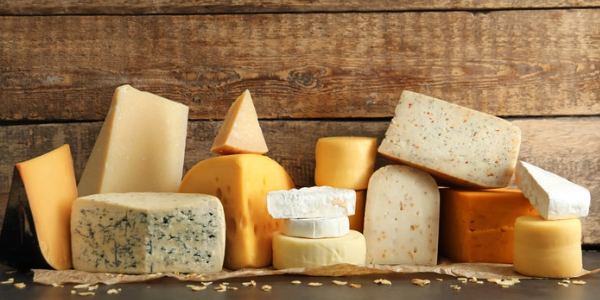
A large-scale long-term study from Sweden found that middle-aged people who consumed more full-fat cheese and cream had a lower risk of developing dementia. Although the results may sound promising, the researchers emphasize that they should be interpreted with caution.
Why these Results Challenge Long-Standing Dietary Recommendations
The study followed 27,670 people over a period of 25 years. During this time, 3,208 participants were diagnosed with dementia. Among those with no known genetic risk for Alzheimer’s disease, those who consumed more than 50 grams of full-fat cheese daily had a 13% to 17% lower risk of developing Alzheimer’s disease. This association did not occur in participants who had genetic risk factors for the disease. People who consumed more than 20 grams of full-fat cream daily also had an overall lower risk of dementia, ranging from 16% to 24%. No significant associations were found for low-fat or high-fat milk, fermented or unfermented milk, or low-fat cream.

The findings are noteworthy because public health recommendations have long advised choosing low-fat dairy products to protect heart health. This association is important because cardiovascular disease and dementia share many common risk factors, including high blood pressure, diabetes, and obesity.
Summarizing the results of previous studies, analyses suggest that cheese consumption may also be associated with a lower risk of heart disease and that full-fat dairy products do not necessarily increase cardiovascular risk. Several other studies have investigated whether similar patterns apply to brain health, but the results are mixed.
Mixed Results Across Different Populations
The overall evidence suggests that studies conducted on Asian populations tend to report benefits of milk consumption for cognitive health, whereas this is not the case in many European studies. One possible explanation for this is that average milk consumption in Asian countries tends to be much lower, meaning that moderate consumption may have different effects than higher consumption.
For example, a Japanese study reported a reduced risk of dementia in people who ate cheese, but overall consumption was very low and the study was sponsored by a cheese manufacturer. In contrast, another Japanese study, funded by the government, found no protective effect of cheese.
Some long-term European studies have also found benefits. In a Finnish study of 2,497 middle-aged men who were followed for 22 years, cheese was the only food associated with a 28% lower risk of dementia.
General Dietary Habits and Brain Health
Other dietary factors also appear to play a role. Higher consumption of milk and processed red meat was associated with poorer results on cognitive tests, while fish consumption was associated with better results. A large study in the United Kingdom involving nearly 250,000 people found a lower risk of dementia among those who ate fish two to four times a week, fruit daily, and cheese once a week.
However, these studies have significant limitations. What people eat is usually self-reported, and changes in memory can affect both eating habits and the accuracy with which people remember what they have eaten. To account for this, the Swedish researchers took two additional steps.
How the Researchers Took Early Changes Associated With Dementia Into Account
First, they excluded all individuals who already had dementia at the start of the study. They then repeated the same calculations after removing those who developed dementia within the first ten years of the study. This did not mean that the study was restarted or that new participants were recruited. It simply meant that the results were re-examined using a smaller group of individuals who remained dementia-free for longer.
The reason for this is that the early stages of dementia can subtly alter behavior long before diagnosis. Those affected may eat differently, lose their appetite, or have difficulty remembering their usual diet. By focusing on participants who remained cognitively healthy over many years, the researchers reduced the likelihood that these early changes would influence the results.

The Role of Food Substitutes and Diet as a Whole
Another important question is whether substitutions played a role. Some of the apparent benefits may be due to the replacement of red or processed meat with cheese or cream rather than the effect of dairy products themselves. This assumption is supported by a Swedish study that found no association between full-fat dairy products and dementia risk in participants whose diets remained stable over a five-year period.
Above all, foods should not be considered in isolation. Dietary habits are more important than individual ingredients. Diets such as the Mediterranean diet, which is consistently associated with a lower risk of dementia and heart disease, include cheese in addition to vegetables, fish, whole grains, and fruit.
In the Swedish study, people who consumed more full-fat cheese and cream were also better educated, less prone to obesity, and had lower rates of diseases associated with dementia, including heart disease, stroke, high blood pressure, and diabetes. All of these factors independently reduce the risk of dementia. This suggests that higher cheese consumption was associated with an overall healthier lifestyle rather than excessive calorie consumption or poor metabolic health.
What the Evidence on Cheese Shows
Overall, the evidence does not support the assumption that full-fat dairy products cause dementia, nor that fermented dairy products reliably protect against it. Full-fat cheese contains several nutrients that are relevant to brain health, including the fat-soluble vitamins A, D, and K2, as well as vitamin B12, folic acid, iodine, zinc, and selenium. These nutrients play a role in neurological function and may contribute to cognitive health. However, the data does not justify consuming large amounts of cheese or cream as protection against dementia or heart disease. The most consistent message remains that a balanced diet, moderation, and overall lifestyle are far more important than any single product on the cheese plate.
Related Posts
-

-
-
Dementia is a debilitating disease that slows down or even stops your cognitive functions, leaving…