
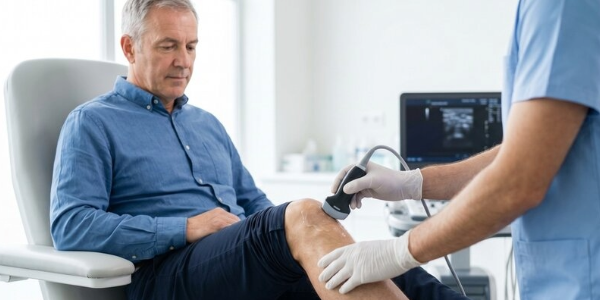
Researchers at the University of Alabama in Huntsville (UAH), part of the University of Alabama System, have identified a promising new application for continuous, low-intensity ultrasound that could one day help treat joint injuries and reduce the risk of post-traumatic osteoarthritis. Their findings suggest that this non-invasive approach could redirect the body’s immune response from prolonged inflammation toward tissue repair, thereby offering a potential drug-free strategy to improve the healing process.
How Ultrasound Affects Immune Cells
The study, published in the Nature journal Scientific Reports, was led by Dr. Anuradha Subramanian, professor of chemical and materials engineering. She combined biological research conducted by Dr. Shahid Khan during his Ph.D. with computer-aided and statistical analyses developed by Dr. Satyaki Roy, a professor of mathematics, as well as contributions from Ph.D. student Owen Trippany. The research was funded by the National Institutes of Health through an R01 grant awarded to Subramanian.
The team focused on macrophages—specialized immune cells that play a key role in both inflammation and tissue repair—to understand how they respond to continuous, low-intensity ultrasound. “After an injury, the body mobilizes pro-inflammatory ‘defender’ macrophages (M1) to clear away damaged tissue, as well as pro-healing macrophages (M2) to support repair and recovery,” Subramanian explained. “A sustained dominance of inflammatory macrophages can create a long-lasting inflammatory environment that contributes to post-traumatic osteoarthritis.”
The researchers wanted to find out whether ultrasound could stimulate these immune cells to transition from an inflammatory state to a healing-promoting state. “In the ‘M1’ state, macrophages promote inflammation to combat damage or infection, but sustained M1 activity can also damage healthy tissue,” Subramanian noted. “In contrast, ‘M2-like’ macrophages support tissue repair and regeneration. The shift of macrophages to an M2-like state is important because it can help reduce chronic inflammation while promoting healing in damaged joints. Our findings suggest that continuous low-intensity ultrasound can help restore this balance by promoting a more reparative macrophage response.”
Roy explained that chronic inflammation is a key factor in the development of post-traumatic osteoarthritis. “Post-traumatic osteoarthritis is driven in part by persistent inflammation, which limits tissue repair and accelerates joint degeneration. Our team is interested in continuous low-intensity ultrasound because it offers a non-pharmacological, non-invasive approach that could help regulate the behavior of immune cells and promote a more reparative healing environment in injured joints.”
A More Realistic Model of Joint Injury
To replicate the conditions inside an injured joint as realistically as possible, the researchers used fibronectin fragments—small protein fragments that are produced when damaged cartilage and connective tissue are broken down following an injury. These fragments are not merely considered breakdown products; rather, they act as so-called danger signals that are recognized by the immune system and trigger inflammatory processes. Unlike many earlier laboratory studies, in which inflammation was artificially induced using bacterial components, this model mimics the actual biological processes following a joint injury much more accurately. This allowed the scientists to investigate how macrophages react under conditions that more closely resemble the changes occurring in an injured joint.
To comprehensively analyze the effects of ultrasound treatment, the team combined this injury model with a transcriptome analysis, which simultaneously records the activity of all genes within the immune cells. Instead of limiting themselves to individual genes or inflammatory markers, the researchers also used a computer-aided method known as differential clustering. This method identifies groups of genes whose activity changes in tandem, thereby revealing which biological programs as a whole respond to ultrasound stimulation. This made it possible not only to determine which genes were more or less active, but also how entire signaling networks that control inflammatory responses, tissue repair, and regeneration were influenced by continuous ultrasound. This systems biology approach provides a significantly more comprehensive picture of the cellular response and strengthens the validity of the results, as it takes into account the complex interactions within the immune response.
Initial Results Show Reduced Inflammation
The studies showed that continuous, low-intensity ultrasound reduced the activity of numerous biological markers typical of a persistent inflammatory response. At the same time, the expression of markers associated with an M2-like macrophage state increased. These repair-oriented immune cells promote wound healing, support the reconstruction of damaged tissue, and help limit excessive inflammatory responses. The results thus suggest that ultrasound treatment does not simply suppress macrophages but could specifically shift their function toward a tissue-protective and regenerative immune response.
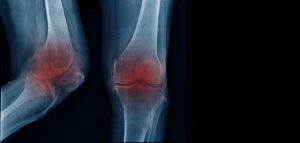
It was particularly noteworthy that the changes did not affect only individual inflammatory markers. Rather, genome-wide analyses showed that entire networks of genes involved in inflammatory processes, immune regulation, cell communication, and tissue repair were influenced by continuous ultrasound. This suggests that the mechanical sound waves can deeply interfere with cellular signaling pathways and activate biological programs that support the natural transition from the acute inflammatory phase to the healing phase. According to the researchers, it is precisely this modulation of the immune response that could be crucial for preventing chronic inflammation and slowing the progressive breakdown of cartilage following a joint injury.
Potentially a Complementary, Non-Invasive, and Drug-free Treatment Option
Although the results are promising, the authors point out that the findings are based exclusively on laboratory studies using cell cultures. Whether the observed effects also occur in a living organism and can actually prevent or delay the development of post-traumatic osteoarthritis there must first be investigated in further studies. As a next step, the findings will therefore be tested in animal models of early post-traumatic osteoarthritis. In particular, the scientists aim to clarify how ultrasound-based modulation of macrophages affects the long-term healing of cartilage, ligaments, and other joint structures, and whether this can help maintain joint function over the long term.
If these results are confirmed, continuous low-intensity ultrasound could represent a complementary, non-invasive, and drug-free treatment option in the future. One possible application would be early use following sports injuries or other joint traumas to specifically steer the immune response toward regeneration, support the healing process, and reduce the long-term risk of post-traumatic osteoarthritis. However, before any potential clinical application, further preclinical studies and subsequent controlled trials in humans are required.
Related Posts
-

Although osteoarthritis affects both men and women, aging women are more at risk than men.…
-
Prevention of osteoporosis in women goes a long way to improving quality of life. We…
-
Signs of aging are a normal part of life. Over time, it is a natural…