

Depressive moods are often viewed as purely psychological problems. However, new research suggests that changes in mood may also be linked to biological processes in the brain. A recent study shows that the increasing accumulation of the tau protein in older adults was associated with a worsening of depressive symptoms—in some cases even when memory and cognitive function were still normal. The findings raise new questions about how early changes in the brain can become apparent.
When Tau Protein Accumulates in the Brain
Mood changes over the course of a person’s life for various reasons. Hormonal fluctuations, lack of sleep, chronic stress, and physical changes can affect emotional balance. Especially during menopause, some women experience a phase in which they feel less emotionally stable, react more irritably, or struggle more frequently with low mood. However, psychological changes are not always exclusively related to hormones or external stressors. Biological processes in the brain can also play a role. A research paper published in 2026 in the journal The Journal of Neuroscience provides new insights into this. The focus is on the tau protein, which plays an important role in Alzheimer’s disease.
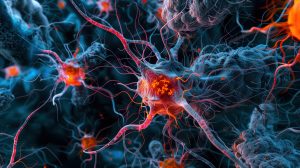
Tau is a protein that normally performs an important function within nerve cells. It stabilizes the so-called microtubules, tube-shaped structures that are needed, among other things, for the transport of substances within the cells. Under certain conditions, however, tau can undergo pathological changes. The protein then partially loses its normal function and aggregates into fiber-like structures within the nerve cells. These deposits are called tau fibrils or tau tangles and are among the characteristic changes associated with Alzheimer’s disease.
The accumulation of altered tau can impair the function and communication of nerve cells. It is associated with the progressive loss of neuronal function and is therefore the subject of intensive study in Alzheimer’s research. It is particularly interesting that such changes do not necessarily occur only after significant memory problems have already set in. Certain pathological processes can develop over a long period of time before they become clearly noticeable in everyday life.
New Study: Link Between Tau Deposits and Depressive Symptoms
The research by Teodora Z. Markova and her team examined the relationship between changes in the tau protein and depressive symptoms in older adults over an extended period. For their analysis, the scientists used data from the Alzheimer’s Disease Neuroimaging Initiative (ADNI), a large-scale research project that investigates changes in brain health related to Alzheimer’s disease. Participants underwent repeated imaging scans, including specialized PET scans designed to detect the accumulation of tau in the brain. Additionally, depressive symptoms were assessed using standardized questionnaires.
The study revealed a remarkable correlation among individuals whose memory and cognitive abilities were still classified as normal: participants with a greater increase in tau also exhibited a more pronounced increase in depressive symptoms over time. Changes in mood thus progressed in parallel with the increasing accumulation of tau. Higher tau levels were also associated with more pronounced depressive symptoms. This pattern was not observed to the same extent in participants who already had mild cognitive impairment or Alzheimer’s disease. The results suggest that changes in mood may be linked to biological processes typical of Alzheimer’s disease even in an early phase of brain aging.
Why Mood May React Earlier Than Memory
From a neurological perspective, it is particularly interesting that changes in mood can occur before significant memory problems become apparent. The brain consists of numerous interconnected networks that are responsible not only for memory and concentration but also for regulating emotions, motivation, sleep, and stress responses. Some of the brain regions involved in regulating mood are among those where changes typical of Alzheimer’s disease can occur relatively early. These include, among others, the brainstem, which contains important groups of neurons involved in regulating neurotransmitters such as serotonin and norepinephrine.

These neurotransmitters influence, among other things, emotional responses, motivation, and the sleep-wake cycle. If these neural networks are impaired, this could also affect mood. The study results support the hypothesis that Alzheimer’s is not exclusively a disease of memory. Rather, various brain functions may be affected, including, possibly, those that control emotional experience. However, it has not yet been conclusively determined which biological mechanisms explain the observed association. In particular, research must investigate whether and how tau changes are directly involved in the development of depressive symptoms.
What This Has to Do with Menopause
Mental well-being can also change during menopause. Some women report mood swings, restlessness, irritability, or depressive moods. These symptoms may be related to the hormonal changes that occur during perimenopause. In particular, the fluctuations and subsequent decline in estrogen levels influence various processes in the central nervous system. Among other things, estrogen affects neurotransmitter systems involved in regulating mood, sleep, and emotional processing. Progesterone and its metabolite, allopregnanolone, also play a role. Allopregnanolone influences the activity of the GABA system, which is involved, among other things, in regulating arousal and relaxation.
When these hormonal signals change during menopause, this can disrupt emotional balance in women who are particularly sensitive to these changes. Sleep disturbances and nighttime hot flashes can further exacerbate this stress. A review article from 2024, published in the journal Maturitas, describes these complex neuroendocrine relationships and demonstrates how closely hormonal changes and mood regulation are linked.
However, it is important to note that the tau study examined older adults and did not specifically focus on women during perimenopause or menopause. It therefore provides no evidence that hormone-related mood swings during menopause are linked to the onset of Alzheimer’s disease. Research on menopause and the study of tau deposits concern different biological processes; while both are associated with brain function and mood, they should not be equated.
Depression Is Not Automatically an Indication of Alzheimer’s
The results could easily lead to the assumption that depressive symptoms are an early warning sign for Alzheimer’s. However, such a conclusion is too far-reaching. Depressive moods are among the most common mental health issues and can have many causes. These include hormonal changes, stressful life events, chronic illnesses, sleep problems, and psychological stress.

Even during menopause, a depressed mood does not automatically mean that a neurological disease is present. Conversely, persistent or newly emerging mental health issues should not be dismissed out of hand as a normal part of aging or menopause. The study shows a statistical association between the development of tau deposits and depressive symptoms in a specific group of older adults. It does not prove that tau alone causes depressive symptoms, nor that mood can be used to reliably predict the later onset of Alzheimer’s disease. To substantiate this, further research and the combination of various biological and clinical data would be necessary.
Why Research on Early Changes in the Brain Is So Important
A key goal of Alzheimer’s research is to detect pathological changes as early as possible. If certain processes are already developing before memory and cognitive function decline significantly, new opportunities for early detection could emerge in the future. The study of mood and emotional changes could play a complementary role in this regard. In particular, changes that are newly emerging or intensifying over a longer period of time could be of interest to researchers.
However, important questions still need to be answered: Which mood changes are actually associated with processes typical of Alzheimer’s disease? How reliably can they be distinguished from common depressive symptoms? And can they help identify people at increased risk at an early stage? Scientists therefore emphasize the importance of further long-term studies. Only when these correlations are confirmed across different population groups and linked to subsequent disease progression can we assess the practical benefits of these findings for early medical detection.
What Women Going Through Menopause Can Take Away From This
For women in midlife, one insight is particularly important: changes in mood should be taken seriously without hastily attributing them to a single cause. During perimenopause, hormonal fluctuations, sleep problems, and other physical changes can affect mental well-being. At the same time, other health-related or psychosocial factors may also be involved. A review article published in the Journal of Affective Disorders in 2024 examined the risk of depression during various phases of menopause.
An analysis of data from 9,141 women showed that perimenopause, in particular, may be associated with an increased risk of depressive symptoms. This underscores how important it is to take a nuanced view of psychological changes during this phase of life and to seek support if symptoms persist. The new tau research adds another perspective to this understanding: the biological aging of the brain may also be linked to changes in emotional experience. For women going through menopause, however, this does not mean that depressive symptoms indicate Alzheimer’s disease. Rather, it highlights the complexity of the interplay between hormones, brain function, and mental health.
Mood and Brain Health are More Closely Linked than Previously Thought
The new study provides evidence that the increasing accumulation of the tau protein in the brain may be associated with a worsening of depressive symptoms in older adults—even when memory and cognitive function are still normal. This brings a previously overlooked aspect of Alzheimer’s research into focus: changes in emotional health may also be linked to early biological processes in the brain.
This connection is particularly interesting for menopause research because hormonal changes during midlife can also influence mood and various functions of the nervous system. Both areas of research demonstrate how closely mental well-being and brain health are linked. However, the study does not establish a direct link between menopausal mood swings and Alzheimer’s disease.