
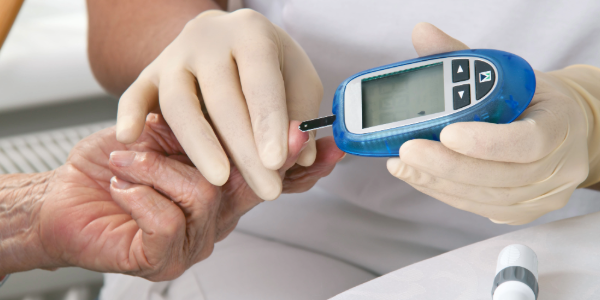
Not only the choice of foods, but possibly also the order in which they are eaten, influences how much blood sugar rises after a meal. A study in mice shows that olive oil consumed before glucose intake can mitigate the rise in blood sugar. The researchers found evidence that an interplay between digestion, hormones, and the nervous system plays a crucial role in this process.
What we eat affects our metabolism. But the timing of when certain nutrients are consumed may also be significant. In a study of mice, scientists found that consuming olive oil before a glucose dose reduced the subsequent rise in blood sugar. At the same time, there were changes in the activity of various hormones and in the rate at which the stomach emptied its contents into the intestines. The findings could help us better understand why the order in which foods are eaten within a meal can influence blood sugar regulation. This is particularly interesting for people with diabetes, for whom it is crucial to avoid sharp fluctuations in blood sugar as much as possible.
Why the Timing of Fat Intake Might Be Crucial
Previous clinical studies have already provided evidence that it may be beneficial to consume vegetables, protein, or fat before carbohydrate-rich foods. Such an order could help limit the rise in blood sugar after a meal without having to eliminate entire food groups from the diet.
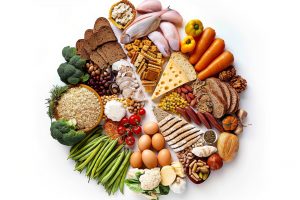
In a pilot study published in 2015 in the journal Diabetes Care, researchers studied eleven people with type 2 diabetes. When vegetables and protein were eaten before carbohydrates, the rise in blood sugar was lower than when the order was reversed. More recent studies on healthy adults also point in this direction. However, the biological processes underlying this effect had not yet been fully elucidated. Possible explanations included delayed gastric emptying and the release of certain gut hormones. The new study also examines how hormonal signals and the nervous system work together to influence glucose processing.
After a meal, food is processed in the stomach and gradually passed into the small intestine, where nutrients are absorbed. The speed of this process influences, among other things, how quickly glucose enters the bloodstream. Slower gastric emptying can cause carbohydrates to reach the small intestine later, resulting in a slower rise in blood sugar levels. In addition, the body responds to food intake by releasing various hormones that regulate glucose metabolism. These signaling molecules include the so-called incretins GIP and GLP-1. They are released in the gut and help regulate blood sugar after a meal. GLP-1 influences, among other things, insulin secretion and can slow gastric emptying.
Research to date suggests that these mechanisms could explain why it makes a difference whether carbohydrates are consumed first or only after other food components. However, exactly how the various hormones interact with the nervous system had not yet been sufficiently investigated. An international research team, including Daisuke Yabe from Kyoto University, therefore sought to understand in greater detail how the timing of fat intake affects blood sugar levels and the processes involved. According to Yabe, dietary approaches are particularly interesting when they can be integrated into everyday life over the long term. The order in which foods are consumed could be one way to achieve this, as it allows for a change in eating habits without requiring people to completely eliminate certain foods from their diets.
Mice Receive Olive Oil Before or After Glucose
To investigate the influence of order, the scientists conducted several experiments with mice. After a nighttime fasting period, they divided the animals into three groups. The first group received water followed by glucose. In the second group, the researchers first administered olive oil. The animals received the glucose only 15 minutes later. The third group, in contrast, received glucose first and then, also 15 minutes later, the olive oil. This experimental design allowed the researchers to compare whether it made a difference whether the fat was consumed before or after the sugar.
They then examined the progression of blood glucose levels and measured the concentrations of several hormones involved in regulating glucose metabolism. These included insulin, glucagon, GIP, and GLP-1. These hormones perform different functions. Insulin helps the body absorb and utilize glucose from the blood. Glucagon, on the other hand, can stimulate the liver to release stored glucose. GIP and GLP-1 support the hormonal response to food intake and help regulate blood sugar levels.
In addition, the scientists wanted to find out whether fat intake altered the rate of gastric emptying. To do this, they used acetaminophen, a commonly used active ingredient for treating pain and fever. The researchers administered the active ingredient orally and then measured how much of it appeared in the blood. Since the absorption of acetaminophen depends, among other things, on how quickly the stomach empties its contents into the small intestine, these measurements allowed them to estimate gastric emptying.
A Smaller Rise in Blood Sugar and Slower Gastric Emptying
The results showed that the order of administration made a measurable difference. When the mice were given olive oil first and glucose 15 minutes later, the initial rise in blood sugar was smaller than in the animals that received glucose first and fat afterward. At the same time, the stomach emptied more slowly. As a result, the glucose reached the small intestine—where it is absorbed—later than usual. This mechanism could explain part of the attenuated blood glucose response.
The scientists also observed changes in the hormones studied. After olive oil intake, concentrations of several hormones had already risen before the glucose was administered. These included glucagon as well as the incretins GIP and GLP-1. The observations suggest that fat intake triggers a series of reactions that could prepare the body for the subsequent processing of glucose. Both the rate of digestion and hormonal regulation appear to play a role in this process.
It was particularly noteworthy that this effect was also observed in mice with type 2 diabetes and in animals with severe insulin deficiency. This suggests that the effect is not exclusively dependent on normal insulin regulation. However, these are results from animal experiments. It is not yet possible to conclude with certainty whether the same mechanisms function in a comparable way in humans.
A Surprising Function of Glucagon
One of the most interesting observations concerned the hormone glucagon. It is primarily known for its ability to raise blood sugar levels. When the body needs energy, glucagon stimulates the liver to release stored glucose. In the experiments, however, the results suggested that glucagon might also be involved in a response that limits the rise in blood sugar following glucose intake. To investigate the hormone’s role more closely, the researchers specifically interfered with signal transmission. They first blocked the glucagon signaling pathway. The effect of the previous olive oil intake remained largely intact.

They then blocked the GLP-1 signaling pathway. In this case, too, the positive effect did not disappear completely. The result was different when both signaling pathways were blocked simultaneously. Under these conditions, the blood-sugar-lowering effect was attenuated. The findings suggest that glucagon and GLP-1 may be involved in the response together. Apparently, the interaction between the two signaling pathways can maintain part of the effect even when one of them is blocked on its own.
This is remarkable because glucagon is typically regarded primarily as a hormone that raises blood sugar. However, its effect depends on the specific biological context. The results suggest that, in conjunction with other hormonal signals, it may be involved in a more complex regulatory mechanism. Further research is needed to clarify which specific processes are responsible for this and how they influence one another.
The Vagus Nerve also Plays a Role
In addition to hormones, the scientists also investigated the role of the nervous system. The focus was on the vagus nerve, which forms an important connection between the brain and various organs. Among other things, the nerve is involved in regulating digestion. It transmits signals between the central nervous system and the digestive tract and helps coordinate various bodily functions. To determine whether these neural connections are important for the effect of the altered meal order, the researchers surgically severed both vagus nerves below the diaphragm in a subset of the mice.
The results suggested that communication via these nerve pathways also contributes to the response to the intake of fat before glucose. This makes it clear that the observed effect apparently cannot be explained solely by slower gastric emptying or by the action of a single hormone. Rather, several systems appear to be interconnected. The digestive tract responds to ingested nutrients, hormonal messengers convey information about the metabolic state, and the nervous system supports coordination among the involved organs. The experiments thus provide evidence that the order of nutrient intake can trigger a coordinated hormonal-neural response. This could influence how quickly glucose leaves the stomach and becomes available in the intestine.
Do Other Dietary Fats Have a Similar Effect?
The scientists also investigated whether the observed effect could be generalized to different types of dietary fats. Their goal was to determine whether the reaction is specific to olive oil or might also occur with other fat sources. Such studies are important for better defining the underlying mechanisms. The results from a single fat source do not automatically imply that all fats have the same effect. Types of fat can differ in their composition and trigger different metabolic reactions.

It is therefore crucial to determine which processes are triggered by fat intake and whether these occur independently of the specific fat source. The experiments are part of efforts to better understand these relationships.
However, the available data is not yet sufficient to provide specific dietary recommendations. In particular, it would be necessary to investigate what amounts of fat would be required, whether the order of foods in typical meals has a comparable effect, and to what extent the response varies among individuals.
Could the Order of Eating Complement Diabetes Treatment?
The results provide a possible explanation for why consuming fat or other food components before carbohydrates can influence the postprandial blood glucose rise. If the effect is confirmed in clinical trials, the order in which foods are eaten could be an additional way to support blood glucose control. This approach would be relatively easy to implement because it would not necessarily require a complete overhaul of one’s diet. Especially when it comes to long-term dietary strategies, practicality in everyday life can be crucial. For some people, changing the order in which they eat might be easier to implement than diets that involve numerous restrictions.
Nevertheless, a smaller short-term rise in blood sugar does not automatically mean that a meal is healthier overall. The amount and type of fats consumed, the overall composition of the diet, and the individual’s metabolic profile must also be taken into account. People with diabetes should therefore not change their treatment on their own based on these results. Whether—and in what form—a specific order of foods might be beneficial must be assessed based on further research.
Age can also play a role. Metabolism often changes with age. Insulin sensitivity may decrease, while in some people the body responds less effectively to fluctuations in blood sugar. This increases the risk of type 2 diabetes, especially when combined with other factors such as a lack of physical activity, being overweight, or an unhealthy diet. Against this backdrop, it is interesting to consider whether the postprandial rise in blood sugar can be influenced by simple changes in eating habits. An adjusted order of food intake could potentially also serve as an approach for older adults to support blood sugar regulation. However, the study described—which was conducted on mice—did not specifically examine how age affects the observed effect. Whether older adults actually benefit in a similar way must therefore be clarified through clinical studies. Especially in older age, a balanced diet with sufficient protein and energy is crucial, so any potential adjustment to meal patterns should always be considered in the context of the individual’s health status.
Further Studies in Humans are Necessary
The experiments show that the order in which nutrients are ingested can influence blood sugar levels in mice. They also provide new evidence that gastric emptying, various hormones, and the nervous system interact in this process. Particularly revealing is the observation that neither blocking the glucagon signaling pathway nor interrupting GLP-1 signaling alone completely eliminated the effect. Only the simultaneous blocking of both pathways attenuated the effect. Together with the findings on the vagus nerve, this suggests a networked regulatory system.
For medical practice, however, it remains crucial whether the results can be applied to humans. Clinical studies must show to what extent the order in which foods are consumed affects blood sugar levels in people with and without diabetes and whether this results in long-term health benefits. The question of which foods and quantities would be suitable for a potential effect also remains open. Only once these relationships have been examined more closely will it be possible to assess whether the order in which foods are eaten could become a reliable supplement to existing dietary recommendations.
Above all, the study highlights just how closely digestion, hormonal regulation, and the nervous system are interconnected. It opens up new perspectives on how the body processes various nutrients—and why it may be crucial not only what is on the plate but also the order in which it is eaten.
Related Posts
-

Alzheimer’s disease is the most common form of dementia. New research suggests that there may…
-
In an exciting Genomic Press interview published in Brain Medicine, Dr. Sophia Shi, a doctoral…
-
High blood pressure in women is often left undiagnosed. It's far too common for it…