
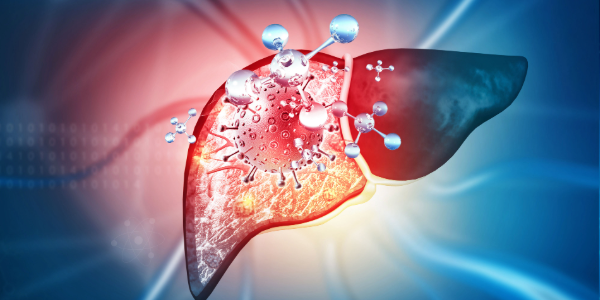
As we age, our hormonal balance changes—in women during menopause and in men during andropause. The consequences affect not only sexuality, sleep, and energy levels, but also metabolism. Liver health is of particular interest in this context. A new Japanese study shows that low testosterone levels, combined with high fructose intake, can increase fat accumulation in the liver. The decline in estrogen after menopause could also increase the risk of fatty liver disease.
When Hormonal Balance Changes
Hormones influence far more than just reproductive function. They regulate numerous metabolic processes and affect, among other things, the distribution of body fat, muscle growth, insulin sensitivity, and the processing of sugars and fats. As we age, this finely tuned system changes.

In women, the production of female sex hormones begins to fluctuate increasingly during menopause. Eventually, estrogen levels in particular decline permanently. In men, this process usually progresses more slowly: testosterone levels may gradually decrease over the years. These hormonal changes can affect body weight and fat distribution. In particular, abdominal fat increases in many middle-aged and older adults. What is often underestimated is that the liver is also affected by these changes.
The Liver: A Vital Metabolic Organ
The liver is one of the body’s most important metabolic organs. It processes nutrients, regulates blood sugar, produces essential proteins, and plays a role in the metabolism of fats and hormones. If metabolism becomes unbalanced, fat can increasingly accumulate in the liver cells. This condition is now referred to as MASLD—metabolic and dietary-related liver disease. It is often associated with obesity, insulin resistance, elevated blood sugar levels, and disorders of fat metabolism.
The problem is that fatty liver can go unnoticed for a long time. Many people affected do not experience any symptoms at first. In some patients, however, inflammation can develop, which over the long term can lead to scarring of the liver tissue and ultimately to cirrhosis. That is why, especially in middle age, it’s worth keeping an eye on liver health in addition to blood pressure and blood sugar levels.
Testosterone Deficiency: Why Men Should Pay Particular Attention to Their Metabolism
Testosterone is the most important male sex hormone. Among other things, it influences muscle mass, bone density, libido, and the distribution of body fat. Testosterone levels can decline with age. Some men develop a pronounced testosterone deficiency, which can manifest, for example, as declining muscle strength, increased fatigue, reduced sexual interest, and an increase in abdominal fat. Metabolism can also be affected.
Low testosterone levels are associated with an increased likelihood of metabolic disorders and metabolically related fatty liver disease. There is a complex interplay at work here: being overweight and having metabolic diseases can also affect testosterone levels. Under certain circumstances, this creates a vicious cycle in which hormonal and metabolic changes reinforce one another. It was precisely this connection between testosterone and liver health that Japanese researchers wanted to investigate more closely.
New Study: When Low Testosterone and Fructose Meet
The study, published in the journal American Journal of Physiology – Endocrinology and Metabolism, examined how low testosterone levels and high fructose intake jointly affect the liver. The scientists conducted the study using male mice. Some of the animals underwent surgery to drastically reduce testosterone production. The animals were then given either normal drinking water or water with a high fructose content for eight weeks. Some experimental groups were also given antibiotics to investigate the influence of gut bacteria.

The results were as follows: Low testosterone levels alone did not lead to a significant increase in fat accumulation in the liver. Fructose alone also did not produce the same pronounced effect as the combination of both factors. Only when low testosterone levels coincided with high fructose intake did the accumulation of triglycerides and cholesterol in the liver increase significantly. The researchers thus found evidence that hormonal changes and dietary habits together can have a stronger influence on liver metabolism than individual risk factors.
The Surprising Role of Gut Flora
Another finding from the study was particularly revealing: apparently, gut flora also plays an important role. The composition of gut bacteria changed in mice that were simultaneously given low testosterone levels and high fructose. The scientists observed an increased concentration of pyruvate in the gut. Pyruvate is an intermediate product of energy metabolism. It is produced, among other things, during the breakdown of glucose and can be further processed in various metabolic pathways.
In additional experiments with isolated liver cells, it was shown that pyruvate, together with fructose, could enhance the accumulation of triglycerides. Treatment with antibiotics also led to a reduction in certain changes in the experimental animals. The results suggest that changes in the gut microbiota may be involved in this process. However, further research is needed to determine exactly how the individual bacteria and metabolic products interact. This brings the connection between the gut and the liver into sharper focus, alongside hormones and diet.
Postmenopausal Women Are also Affected
Although the Japanese study focused exclusively on male mice, the topic is also relevant for women during and after menopause. This is because estrogen also plays an important role in liver metabolism.
During the reproductive years, the female sex hormone influences, among other things, fat distribution and insulin sensitivity. With the decline in estrogen after menopause, this situation changes. Many women notice that body fat increasingly accumulates in the abdominal area, even though their dietary habits may have changed very little. The risk of insulin resistance, unfavorable blood lipid levels, and metabolically-related fatty liver disease may also increase. A review article published in Endocrine Reviews in 2025 describes how Estrogen deficiency can influence liver metabolism, fat distribution, and insulin sensitivity.
A systematic review with a meta-analysis by Jaroenlapnopparat and colleagues from 2023 also found a link between menopause and an increased incidence of fatty liver disease. The analysis included twelve studies involving nearly 20,000 women. This does not mean that every woman develops fatty liver disease after menopause. However, it does show that hormonal changes can be an important factor in metabolic health. It is important to note the scientific distinction: The Japanese testosterone study does not provide direct insights into estrogen deficiency. The associations observed in women stem from separate studies.
Why Fructose Can Be Problematic for the Liver
Fructose occurs naturally in fruit. However, particularly high amounts can be consumed through sweetened beverages, sodas, fruit juices, and highly processed foods. The liver is responsible for a large portion of the processing of ingested fructose. A consistently high intake can promote the accumulation of fat in the liver. High consumption of sugary beverages is particularly problematic, as this can lead to the intake of larger amounts of sugar without producing a comparable feeling of fullness.
It is important to distinguish between whole fruits and sugary beverages. In addition to fructose, fruit also contains dietary fiber, water, and other valuable nutrients. The study does not suggest a blanket ban on fruit. It makes more sense to reduce, in particular, the regular consumption of soft drinks, sweetened beverages, and products high in sugar.
What Can Women and Men Do in their Daily Lives?
Regardless of whether hormonal balance is changing due to menopause or andropause, there are several measures that can support metabolism and liver health:
- Reduce sugary drinks: Soft drinks and highly sweetened beverages, in particular, should be consumed as rarely as possible.
- Eat a balanced diet: Vegetables, legumes, whole grains, and high-quality protein sources support a balanced diet.
- Maintain muscle mass: Regular exercise and strength training help maintain muscle mass and metabolic health.
- Keep an eye on belly fat: An excessive increase in waist circumference may indicate an elevated metabolic risk.
- Monitor liver health: If relevant risk factors are present, a medical evaluation may be advisable.
Hormonal symptoms should also be taken seriously. If a severe testosterone deficiency is suspected or if symptoms related to menopause are present, a medical examination can help identify possible causes and treatment options. However, hormone therapy should not be started solely with the goal of preventing fatty liver disease. The scientific evidence for this is not yet sufficient.
Aging Hormones Affect More Than Just Sexuality
The hormonal changes during menopause and andropause affect more than just libido, sleep, mood, or physical performance. They can also influence metabolism and liver health. The Japanese study provides an interesting indication that low testosterone levels and high fructose intake can together increase fat accumulation in the liver. The gut microbiota also appears to play a role here. For women, other research shows that the decline in estrogen after menopause is also associated with an increased risk of metabolically-induced fatty liver disease.
This highlights just how closely hormones, diet, the gut, and metabolism are interconnected. The key takeaway: Anyone dealing with the hormonal changes of midlife should not only consider sexuality and menopausal symptoms but also keep long-term metabolic health in mind, because a healthy liver is a vital component of healthy aging—for women as well as for men.