

Andropause—often referred to as “male menopause”—describes a gradual process in which free testosterone levels decline. Unlike female menopause, andropause progresses slowly over many years. During this phase of life, many men report symptoms such as decreased libido, reduced energy, mild mood swings, sleep problems, or stress intolerance. Although herbal active ingredients cannot completely “reverse” these changes, they can help to stabilize general well-being and alleviate certain symptoms.
The following section presents the most important plant substances that can help men during andropause, with detailed explanations of their mechanisms of action, effects, and special features.
Maca – Energy, Libido, and Hormonal Balance
Botanical name: Lepidium meyenii
Parts used: Tuber
Origin: Highlands of the Peruvian Andes
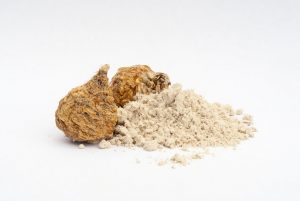
Effect on libido and sexual function
Maca has been used for centuries as a tonic for fertility and libido. Studies show that maca can cause an improvement in sexual desire regardless of testosterone levels. The effect is often described as subtle but stable.
Energy and mood
During andropause, energy levels can decrease – not due to a severe lack of energy, but rather due to a diffuse tiredness. Maca contains secondary plant substances called macamides and macaenes. These are believed to increase energy levels, similar to an adaptogenic effect.
Hormone-regulating properties
Maca does not directly influence testosterone, but appears to have a harmonizing effect on the neuroendocrine system. This allows the body to regulate stress better, which indirectly improves hormonal balance.
Ginseng – Vitality, Blood Circulation, and Stress Adaptation
Botanical names:
- Panax ginseng (Korean/Chinese ginseng)
- Eleutherococcus senticosus (Siberian ginseng – botanically not “real” ginseng)
Improvement of sexual function
Panax ginseng contains ginsenosides, which can have a vasodilatory effect. This supports blood circulation, which benefits men with erectile dysfunction – a typical symptom of andropause.
Stress and mental fatigue
Ginseng has an adaptogenic effect and can help to better cope with mental stress. During andropause, many men are more sensitive to stress; ginseng can have a balancing effect here.
Energy and performance
Many users report increased mental and physical stamina. This is significant during andropause, as testosterone and DHEA, both associated with energy levels, slowly decline.
Ashwagandha – Stress Regulation, Sleep Quality, and Hormone Balance
Botanical name: Withania somnifera
Class of active ingredients: Withanolides
Tradition: Indian Ayurvedic medicine
Stress and cortisol
Ashwagandha is considered one of the most powerful adaptogens. High cortisol levels can lower free testosterone levels, disrupt sleep, and impair sexual function. Some studies show that ashwagandha can reduce stress markers.
Sleep quality
Many men in andropause sleep poorly. Ashwagandha can help calm the nerves and thus improve sleep – which in turn has a positive effect on energy, mood, and libido.
Effect on male sexual function
Although ashwagandha is not a testosterone replacement, studies show that it can have slight positive effects on libido and erectile function, presumably through stress reduction and improved regeneration.
Tribulus terrestris – Libido and General Well-Being
Botanical name: Tribulus terrestris
Active ingredients: Saponins, especially protodioscin
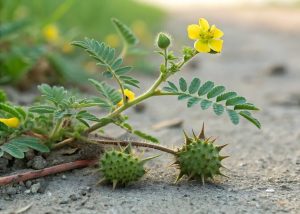
Libido and sexual vitality
Tribulus is often used to treat declining libido. Although studies show no significant increase in testosterone levels, many men report increased sexual interest.
Effect on well-being
Tribulus appears to influence neural activity in areas of the brain associated with pleasure, motivation, and drive. During andropause, this effect can help cushion mood swings.
Erectile function
Some studies describe an improvement in erectile function, possibly through optimization of nitric oxide release, which is responsible for vascular relaxation.
Fenugreek – Metabolism, Libido, and Male Energy
Botanical name: Trigonella foenum-graecum
Active ingredients: saponins, diosgenin
Libido and sexual function
Fenugreek extracts have been shown in some studies to improve libido and sexual satisfaction. However, this occurs less through a direct increase in testosterone than through an influence on free androgens or their receptors.
Metabolism and energy
Many men develop a slight tendency to gain weight and become insulin resistant during andropause. Fenugreek has shown metabolic benefits in studies, including effects on blood sugar, appetite, and energy utilization.
Vitality
The extract can improve subjective energy levels and reduce fatigue, which is a common issue during andropause.
Saffron – Mood, Sexual Function, and Stress Balance
Botanical name: Crocus sativus
Active ingredients: Crocin, safranal
Mood and Emotional Balance
Studies have shown that saffron has mood-lifting effects comparable to classic antidepressants, but remains mild and herbal. Since mood swings are not uncommon during andropause, saffron can contribute to emotional stability.
Libido and Sexual Satisfaction
Some studies have shown that saffron can positively influence sexual function in men, including erections and satisfaction, presumably through effects on neurotransmitters such as dopamine and serotonin.
Stress Reduction
Saffron has a relaxing effect and can alleviate stress-related symptoms, which indirectly has a positive effect on energy and sex life.
Rhodiola Rosea – Mental Strength, Energy, and Stress Resilience
Botanical name: Rhodiola rosea
Active ingredients: Rosavins, salidroside
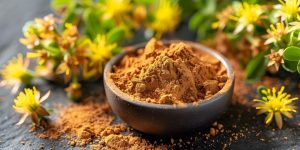
Mental exhaustion
Many men feel mentally exhausted more quickly during andropause. Rhodiola can support mental performance and reduce fatigue.
Stress resistance
Like other adaptogens, Rhodiola reduces stress perception, has a balancing effect, and strengthens the ability to tolerate stress.
Motivation and drive
Lack of drive is a common companion to hormonal changes. Rhodiola can have a motivating effect without being stimulating like caffeine.
Nettle root – Supports Male Hormone Balance
Botanical name: Urtica dioica
Binding to SHBG
An interesting effect of nettle root is its potential binding to sex hormone-binding globulin (SHBG).
Since SHBG increases during andropause and binds free testosterone, lower SHBG binding can help more free testosterone remain available—but only to a small extent.
Prostate health
Many men over the age of 50 develop mild prostate problems. Stinging nettle root is often used in this context and can relieve symptoms such as frequent urination, which indirectly leads to a better quality of life.
Pumpkin Seed Extract – Prostate, Vitality, and General Well-Being
Botanical name: Cucurbita pepo

Prostate health
Pumpkin seed extract is traditionally used for mild prostate enlargement. During andropause, the likelihood of prostate problems increases, which is why this plant substance is often used in combination with other substances.
Fatty acids and micronutrients
Pumpkin seeds contain zinc, phytosterols, and omega-6 fatty acids, which are essential for hormonal processes and the immune system.
Vitality
Some men report a general improvement in vitality, presumably due to the combination of micronutrients and hormone-related effects.
Related Posts
-

Several studies show that niacin, or vitamin B3, may help reduce and even completely overcome…
-
A surgical procedure known as a vasectomy could precipitate a medical condition in men called…
-
Andropause can be difficult to deal with on your own. Managing andropause symptoms in the…