

Age-related macular degeneration (AMD) affects a huge number of older people. About one-third of people over the age of 80 have AMD. In the United States, approximately 20 million people aged 40 and older live with the disease. AMD is also a significant health issue in Europe: estimates suggest that around 67 million people in the European Union are currently affected by some form of the disease, and due to the aging population, this number is expected to rise further in the coming decades.
In most cases, it is the dry form of AMD. It usually progresses slowly but can impair central vision over time, making it harder to recognize faces, read, drive, or focus on objects directly in front of you. Despite the high prevalence of dry AMD, doctors still have limited options for stopping it early. A study from Aalto University points to a different strategy. Instead of trying to replace damaged cells after vision loss has already progressed, the researchers are investigating whether they can help vulnerable eye cells defend and repair themselves before the disease causes severe damage.
Helping Aging Eye Cells Defend Themselves
The approach uses carefully controlled heat delivered via near-infrared light. The goal is to gently warm the tissue at the back of the eye just enough to activate natural repair mechanisms without causing damage. Professor Ari Koskelainen explains that the idea is to strengthen the protective mechanisms in the affected cells. “Cell function and protective mechanisms weaken with age, exposing the fundus [the inner surface at the back of the eye] to severe oxidative stress,” he explains. “Free oxygen radicals damage proteins, causing them to misfold and aggregate; as a result, fatty protein deposits, known as drusen, begin to accumulate, which is the most important diagnostic criterion for the dry form of age-related macular degeneration.”
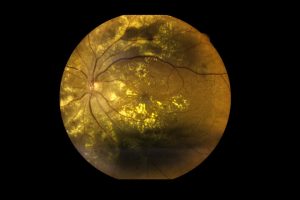
These fatty protein deposits, known as drusen, are an important warning sign of dry AMD. As they accumulate, they can impair the health of the retina, particularly the macula, the part of the eye responsible for sharp central vision. The Aalto team’s method is designed for the early diagnostic phase, when there may still be time to slow or possibly halt the progression of the disease. That is the main reason why the work has attracted attention. It targets the damage before it reaches devastating proportions.
Why Heat Might Help
Applying heat to the retina is not straightforward. The tissue must be heated by only a few degrees, and the back of the eye is difficult to measure directly. If the temperature rises above about 45 degrees Celsius, retinal cells can be permanently damaged. To solve this problem, the researchers developed a system that can heat the tissue using near-infrared light while simultaneously monitoring the temperature in real time. This precise control is crucial, as the treatment is only effective and safe within a narrow therapeutic window. The heat is not intended to destroy the tissue, but rather to act as a controlled biological stress signal. Scientists refer to this as a mild heat shock. Such a stimulus can activate cellular protective programs that work very effectively in young organisms but gradually decline with age. One of the most important responses is the formation of so-called heat shock proteins (HSPs). These proteins function as molecular chaperones—a kind of quality control mechanism for the cell. They monitor the correct folding of newly formed proteins, stabilize damaged proteins, and help restore misfolded proteins to their functional structure. This is particularly important in the aging retina, as oxidative stress leads to an increasing accumulation of damaged proteins.
In dry age-related macular degeneration, free oxygen radicals cause damage to cellular components. Proteins can lose their normal structure, clump together, and eventually form deposits known as drusen. These deposits are considered one of the characteristic features of the disease and are associated with progressive damage to the retina. Heat shock proteins can influence this process on multiple levels. They support the repair of damaged proteins, prevent the formation of larger protein aggregates, and mark irreparably damaged molecules for degradation. This reduces the burden on the cell and preserves its functionality for longer. Furthermore, controlled heating appears to activate another important protective mechanism: autophagy. This term literally means “self-digestion” and describes the cell’s own recycling system. Damaged proteins, defective mitochondria, and other cellular waste are enclosed in special membrane structures and subsequently broken down enzymatically in so-called lysosomes. The resulting building blocks can be reused by the cell.
However, the efficiency of autophagy declines with age. As a result, cellular waste products accumulate, which can further exacerbate inflammatory processes, oxidative stress, and tissue damage. Many researchers now view impaired autophagy as a key factor in age-related diseases, including dry AMD. In their animal experiments, researchers at Aalto University were able to demonstrate that mild heat shocks increase both the production of heat shock proteins and the activity of autophagy. This simultaneously stimulates two key cellular defense systems: the repair of damaged proteins and the removal of cellular waste. The hope is that this will increase the resilience of retinal cells and slow down the disease process at an early stage, before irreversible loss of central vision occurs.
Activating the Cell’s Cleaning System
When damaged proteins have already clumped together or cell components have been irreparably damaged, another cellular defense mechanism kicks in: autophagy. The term means “self-digestion” and describes the cell’s own recycling system. Yoshinori Ohsumi was awarded the 2016 Nobel Prize in Physiology or Medicine for elucidating its fundamental mechanisms. In this process, damaged proteins, defective cell organelles, and other waste products are enclosed in special membrane structures and subsequently broken down by enzymes in lysosomes. The resulting building blocks can be reused by the cell.
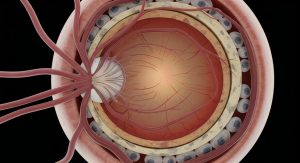
This process is particularly important for retinal cells, which rarely regenerate and must therefore remain functional for decades. However, autophagy declines with age. This allows damaged proteins, oxidized fats, and defective mitochondria to accumulate, which intensifies oxidative stress and inflammatory reactions. In dry AMD, this could contribute to the formation of drusen and the progressive loss of retinal function.
“We were able to show that, with the help of heat shocks, we can activate not only the production of heat shock proteins but also autophagy. This process is like waste disposal,” says Koskelainen. Controlled heating thus appears to stimulate two important protective mechanisms simultaneously: heat shock proteins help repair damaged proteins, while autophagy eliminates components that can no longer be repaired. This is intended to strengthen the resilience of retinal cells and slow down disease-related damage as early as possible.
Promising Results Ahead of Human Trials
The method has been tested on mice and pigs. In these animal studies, the researchers were able to demonstrate that controlled heating can trigger the desired protective response in retinal tissue. The next important step is human trials. The start of patient studies is planned for spring 2026 in Finland. In the first phase, the focus is on safety, not on proving that the treatment improves vision or halts the progression of AMD. If this phase is successful, the researchers hope to determine how often the procedure would need to be repeated. “The treatment must be repeated because the response can already begin to wane a few days after treatment,” says Koskelainen. This detail is important. The treatment may not be a one-time solution. If it works in humans, it could instead become a maintenance therapy repeated at regular intervals to sustain the eye’s protective mechanisms.
The planned studies are also intended to show whether the biological effects triggered by the heating occur just as reliably in humans as they do in animal models. Among other things, the researchers will investigate whether the activation of heat shock proteins and autophagy actually leads to improved cell health in the retina and whether changes in drusen, inflammatory processes, or other disease markers can be detected. Only in later phases of the studies will the focus shift to determining whether this also results in concrete benefits for patients—such as a slowing of disease progression or the long-term preservation of vision. However, particularly with a slowly progressive disease like dry AMD, such evidence may require several years of observation.
A Rapidly Evolving Field of Research in Dry AMD
The Aalto approach is part of a broader shift in research on dry AMD. For years, the disease was considered difficult to treat, particularly in the early stages, when the retina is already damaged but no severe vision loss has yet occurred. Meanwhile, researchers are increasingly pursuing strategies that directly target the biological causes of the disease, including oxidative stress, chronic inflammation, energy metabolism disorders, and the accumulation of cellular waste.
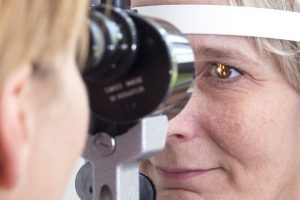
One example of this is the Valeda Light Delivery System, which is approved in the U.S. The device uses a technique known as photobiomodulation, which employs red and near-infrared light to support energy production in the mitochondria of cells. The treatment is intended to improve the function of weakened retinal cells and reduce oxidative stress. Clinical trials showed improvements in visual acuity and other visual functions in selected patients with dry AMD, which is why the U.S. Food and Drug Administration (FDA) has approved the system for certain patient groups.
However, the approach taken by the Aalto researchers differs from photobiomodulation. Instead of directly influencing cell activity via light signals, the retina is heated in a controlled manner to stimulate natural protective mechanisms such as the formation of heat shock proteins and autophagy. Both methods thus pursue the same overarching goal: to strengthen the resilience of aging retinal cells before irreversible damage occurs. Whether the Aalto method can achieve similar or even better results remains to be seen in upcoming clinical trials. Nevertheless, this development underscores that light-based therapies are increasingly viewed as a promising approach to influencing the progression of dry AMD in the early stages of the disease, rather than merely treating its consequences.
From the Lab to the Eye Clinic
The researchers’ findings were published in the prestigious journal Nature Communications. At the same time, the scientists are working to further develop the technology through the startup Maculaser and prepare it for clinical use. The goal is to turn a promising laboratory procedure into a practical treatment for eye clinics and, later, for private ophthalmologists as well.
However, the path from successful animal experiments to an approved therapy is a long one. First, clinical trials in humans must demonstrate that the treatment is safe and does not cause unwanted damage to the sensitive retina. Only then can it be investigated whether the activation of heat shock proteins and autophagy actually slows the progression of dry AMD or stabilizes vision in the long term. In addition, questions regarding the optimal duration of treatment, the frequency of applications, and the selection of suitable patients must be clarified.
“According to an optimistic timeline, the method could be used in hospital eye clinics as early as three years from now,” says Koskelainen. “The ultimate goal is for it to be readily available at your local ophthalmologist.” For now, however, hope still outweighs clinical evidence. Should the approach prove successful in upcoming studies, it could usher in a paradigm shift in the treatment of dry AMD: Instead of reacting only to damage that has already occurred, the aim would be to strengthen the retina’s natural protective and repair mechanisms at an early stage, thereby delaying the loss of vision for as long as possible or even preventing it.