

Robots in the operating room are seen as a symbol of the future of medicine. In knee replacement surgery, too, the technology is intended to help surgeons work with even greater precision. Yet a large British study has reached a conclusion that is likely to surprise many: Despite greater precision, patients had neither less pain nor better mobility one year later than they did after conventional surgery.
The Largest Study of Its Kind Challenges Expectations
A walk, a hike, or simply climbing the stairs—activities that were once taken for granted can become a daily struggle with advanced knee osteoarthritis. Pain, stiff joints, and increasingly limited mobility rob many people of a piece of their quality of life. When conservative treatment options are no longer sufficient, a total knee replacement may become necessary. A lot has changed in orthopedic surgery in recent years. In addition to proven surgical procedures, robotic technology is increasingly being used. It promises planning accurate to the millimeter, more precise bone cuts, and better adaptation of the artificial joint to the individual’s anatomy.

At first glance, this sounds like clear progress. But whether this technical precision actually leads to a better recovery is another question. This is precisely what a new, particularly comprehensive study from the United Kingdom set out to examine. The so-called RACER-Knee study was coordinated by the University of Warwick and University Hospitals Coventry and Warwickshire. It is considered the world’s largest randomized controlled trial comparing conventional knee replacement surgery with a robot-assisted procedure.
A total of 339 patients participated. They underwent surgery at ten hospitals in the UK, performed by 33 surgeons. One group received an artificial knee joint using conventional surgical instruments, while the other group underwent surgery using the Mako robotic system from the manufacturer Stryker. What made this study unique was that the results were not evaluated solely on the basis of technical measurements. The decisive factor was, above all, how the patients actually felt after the procedure. And this is precisely where a surprising picture emerged. Twelve months after surgery, the differences between the two groups were minimal. The patients who underwent robot-assisted surgery had neither significantly better mobility nor less pain. Nor was their overall recovery noticeably better than that of the patients who had undergone conventional surgery.
What Does a Robot Do During Knee Surgery?
In a traditional knee replacement surgery, the surgeon removes damaged joint surfaces and prepares the bone so that the artificial joint components can be inserted. The experience of the surgical team, the anatomical conditions, and the precise alignment of the implant play a crucial role in this process. With the robot-assisted method, additional technology comes into play. Before the procedure, a customized model of the knee joint is created. It helps the surgical team plan the position of the artificial joint and tailor the necessary steps to the patient’s specific anatomy.
During the operation, the surgeon continues to lead the procedure. The robot does not perform the surgery on its own but provides support via a controlled robotic arm. It helps position instruments precisely and execute the planned incisions with the greatest possible accuracy in terms of angle and depth. The idea behind this is that if the artificial joint is optimally positioned, it could lead to better function, fewer symptoms, and more natural movement in the long term. However, the study results show that this correlation is not automatic.
A More Precise Procedure Does Not Automatically Mean Less Pain
A particularly important component of the study was the so-called Forgotten Joint Score. This is an assessment system that measures how much people are still even aware of their artificial joint in everyday life. A good result means that the artificial knee draws as little attention as possible when walking, standing up, or performing other everyday movements. Ideally, patients hardly think about the fact that they have an artificial joint. Specifically with regard to this important metric, the researchers found no significant difference between the two surgical methods after twelve months.
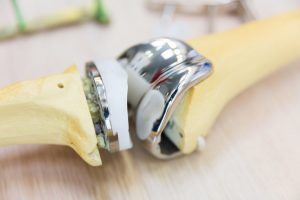
Other criteria were also examined. These included walking ability, pain during the hospital stay, symptoms in the first three months after surgery, and pain levels after one year. The results remained similar: Robotic technology did not lead to measurably better outcomes in the patient group studied. However, this does not mean that the technology is useless. It certainly allows for more precise execution of certain surgical steps. It’s just that, so far, no convincing additional benefit for patients can be derived from this precision.
Robotic Surgery Costs More Time and Money
In addition to the medical outcomes, the researchers were also interested in the economic aspects. After all, modern medical technology is expensive. The costs of acquisition, maintenance, training, and the additional effort involved must ultimately be reflected in the benefits for patients. In the study, robot-assisted surgeries took an average of 10.5 minutes longer than conventional procedures.
The additional costs amounted to approximately 950 British pounds per surgery. Based on the results to date, the procedure was not deemed economically viable in the first year following surgery under current British cost-effectiveness standards. This is an important point, especially given the limited resources in the healthcare system. If a treatment costs significantly more, there should ideally be a corresponding demonstrable medical benefit. However, these figures do not imply that robotic surgeries have no economic benefit whatsoever. To do so, potential long-term benefits must also be taken into account.
Another important issue concerns safety. After all, people undergoing knee surgery not only want to achieve the best possible outcomes but also want to minimize the risk of complications. The study found no evidence that robotic-assisted surgery was associated with a higher risk of serious adverse events. In this regard, the method proved to be comparable to conventional surgery. This is certainly positive news. After all, the results do not argue against the use of the technology itself. Rather, they show that the additional benefits for recovery that had been hoped for so far have not yet been sufficiently proven.
Why Individual Anatomy Could Play a Greater Role in the Future
The researchers certainly see potential for the further development of robotic surgery. A key approach could be to tailor the technology even more closely to individual differences among patients, because not every knee is the same. Bone shape, joint position, ligament tension, and the overall leg axis vary from person to person. Expectations regarding the artificial joint and physical conditions also differ from person to person.
Therefore, implanting an artificial knee joint as precisely as possible according to a technical plan is not automatically the same as finding the optimal position for a specific individual. The scientists suspect that robotic technology could only realize its full potential if the improved precision is specifically used for truly individualized surgical planning. This requires further research and a better understanding of which implant position actually yields the best results under which anatomical conditions.
What Does this Mean for Women Going Through Menopause?
Even though the study did not specifically examine a link to menopause, the topic is of interest to many women in midlife. As people age, joint health becomes a greater focus. Some women report joint discomfort, stiffness, or pain around the time of menopause. However, such symptoms should not automatically be attributed to hormonal changes. Persistent knee discomfort can have various causes, including osteoarthritis, overuse, or inflammatory conditions.

This is precisely why it’s important to have symptoms evaluated by a doctor rather than simply attributing them to aging or menopause. If advanced knee osteoarthritis is indeed present and joint replacement is being considered, it’s worth asking specific questions: Which surgical method makes sense in this individual case? How much experience does the treating team have? What benefits can realistically be expected from the use of a robot? The new study provides important guidance here. It shows that patients should not be swayed solely by modern technology or the term “robotic surgery.” The decisive factor remains which procedure is most likely to yield the best treatment outcome given the specific circumstances.
The Next Ten Years Will Be Crucial
The research is not yet complete with the conclusion of the first evaluation phase. Participants will continue to be monitored for a total of ten years. Through this, the scientists aim to determine whether differences between the two procedures will emerge in the long term. A particularly important question is whether robotic assistance might help prevent subsequent follow-up surgeries.
Even if no decisive advantages have emerged after twelve months, the technology could therefore take on a different significance in the long term. The RACER-Knee study is therefore less a rejection of modern robotic surgery than a reminder that medical innovations must be carefully evaluated. For people with knee osteoarthritis, what ultimately matters is not how much high-tech equipment is used, but whether they can walk with less pain after surgery, manage their daily lives independently, and regain their freedom of movement.